Canada’s Best Places to Live 2010
Which cities have the best weather? The most affordable houses? The lowest crime rates? We crunch the numbers for more places than ever, to map out the winners you'll want to call home.


Advertisement
Which cities have the best weather? The most affordable houses? The lowest crime rates? We crunch the numbers for more places than ever, to map out the winners you'll want to call home.
 (For the full list and rankings, click here.)
If you want the scoop on which Canadian cities are the best places to live, Chris St. Clair is your go-to guy. After all, he crisscrosses the entire country every weekend. Well, not literally. St. Clair is a presenter on The Weather Network, where he gives country-wide forecasts to a national audience on Saturdays and Sundays.
During his long career as a broadcaster (and his former life as a commercial pilot), St. Clair has lived, worked or hung out in all of our major cities, so he knows what makes a great place to put down roots. He knows both the good and the bad in Halifax, for instance, since his family moved there when he was eight. “The summers are awesome, and the fall can be beautiful, but winter can be long and miserable,” he says.
St. Clair attended Acadia University in Wolfville, in Nova Scotia’s Annapolis Valley, where his father still lives. On his many trips back to the region, he’s noticed the types of changes that are happening in many communities across Canada. “Farmers are selling off their land and people are building large homes on large lots. Every time I go down, I’m stunned at how much development is taking place. It’s taking the rural charm out of it and making it a little more urban.”
His dad owned a construction company with an office in New Brunswick, so St. Clair has visited Fredericton and Moncton countless times. “Fredericton is a beautiful city. They’ve really done a nice job redeveloping their downtown.” He remembers being unimpressed with Moncton when he went there as child, but since then, thanks to one of the healthiest growth rates in the country, the city has come a long way.
While St. Clair has never lived in the West, he’s travelled throughout the Prairies, the Rocky Mountains and up and down the Pacific coast. One of his favourite cities is Victoria, but he wouldn’t live there—the houses are way too expensive. St. Clair and his wife Susan prefer small cities with lower living costs. Places like Kingston, Ont., where they settled almost 30 years ago. “I made a conscious choice not to live in Toronto. I couldn’t imagine living there and dealing with that traffic all the time.”
As St. Clair can attest, there are countless factors that contribute to a city’s livability. But in our annual survey, we go strictly by the numbers. There’s an old joke about a visitor to Lake Louise who quipped, “Sure, it’s beautiful. But if you take away the mountains, the lake, and the trees, what have you got?” In fact, that’s our starting point: we don’t give any marks for alpine scenery, sandy beaches, charming heritage buildings or other qualities that attract tourists. Instead, we focus on things we can quantify with hard data. We look at climate, because good weather really does make a city more livable. We concentrate on practical matters that are important for a person’s long-term happiness: affordable housing, prosperity, ease of travel, and good health care. We look for cities that show healthy growth, but aren’t sprawling out of control.
We refine our methodology each year, and we believe that this, MoneySense’s fifth annual ranking of Canada’s Best Places to Live, is better than ever. When we first started ranking communities, we covered fewer than a hundred—now we’re up to 179. We include every city or town of at least 10,000 people, but in the past, we lumped together communities under 100,000 in large metropolitan areas. This year, for the first time, we’ve separated out all suburbs of at least 50,000 people, which added a full 25 new cities to our survey.
As always, however, we don’t make it easy to score high marks. Although 105 points are up for grabs, only the top three places managed to score higher than 70. That’s because we rank each city from one to 179 in each category and assign full marks only to the winner. A city that ranks in the middle in a given category gets half the maximum, while the lowest-ranked gets only a tiny fraction of a point. In the end, the rankings look like the results of a bobsled race—some are separated by only a few tenths or even hundredths of a point.
The sunshine factor
As much as Canadians love to boast about our cold-hardiness, the fact is that most of us like mild temperatures and sun. That’s why weather is the most influential category in our rankings. We award a city up to six points in each of three areas: the amount of rain and snow, the number of wet days per year, and the number of days below freezing. Cities earn up to two additional points for air quality, as measured by the amount of ground-level ozone and particulate matter its residents are forced to breathe.
In the precipitation department, we look for the sweet spot of 700 mL of rain or snow annually. British Columbia communities lay at both extremes in this category: bone-dry communities in the interior such as Kelowna and Penticton scored low, as did soggy coastal cities such as Prince Rupert and Burnaby. Most of the cities that ranked high for fewest days with rain or snow were, not surprisingly, in Alberta and Saskatchewan. The Prairies are also home to many of our coldest cities. Thompson, Man., holds the title with a teeth-chattering 240 freezing days per year.
It turns out that the happy medium for Canadian weather is Southern Ontario. Of the top 20 point-getters when it comes to the three climate factors, 19 are in that region. Winters are cold, but most Ontarians don’t need to put a piece of cardboard in their car’s grille so the radiator won’t freeze; summers are hot, but not overly dry. “We actually get all four seasons here, and they’re all about as long as they’re supposed to be,” says Chris St. Clair.
Nice house if you can get it
Big cities like Vancouver, Edmonton and Toronto have many appealing traits, but affordable housing isn’t one of them. Although the real estate industry insists we’re not in a bubble, house prices continue to climb into nosebleed territory: the price tag on Vancouver’s average dwelling has risen to a staggering $762,100. (And if you just look at single, detached homes, some surveys say prices have hit $1 million.)
Of course, some people who live in Canada’s largest centres also have access to the highest-paying jobs. To reflect this, we also look at how long it would take a person to afford a home if they earned an average local salary. We award a total of 15 points in the housing category: 7.5 for average price, and 7.5 for the number of years it would take a local resident to buy a home.
The mix of stagnant salaries and rocketing house prices in 2009 had a big impact: Victoria’s affordable housing ranking slid from 147th to 174th, forcing it to give up last year’s top ranking and fall to number eight. Vancouver got hammered even worse. This year we separated out some of its surrounding suburbs and ranked them separately—and when we just looked at housing in the City of Vancouver, we found prices were soaring. Vancouver is now by far Canada’s least affordable city, with an average house price that’s almost 10 times what the typical household earns in a year. Vancouver also saw a big increase in unemployment this year, which helped sink the city from number five overall to number 29.
On the other hand, reasonably priced housing is a big reason why Moncton, Fredericton and Brandon, Man., have consistently finished high in our annual rankings. In New Brunswick’s capital, the average house price is just $125,000, less than twice the average annual salary.
Money matters
We’re not being judgmental, honest. We don’t mean to imply that people with higher incomes or nicer cars make better neighbours. But the fact is most people want to live in cities that are prosperous: affluent communities tend to be safer, cleaner and more pleasant than those that are weighed down by poverty and unemployment. To measure a city’s prosperity, we combine a number of factors and assign them a total of 25 points.
Few things can devastate a city faster than widespread joblessness: that’s why we give up to 10 points for high levels of employment. After several years of record-low unemployment in Canada, the national rate soared past 8% in 2009, and some cities were hit hard: several resource-based communities, many in Quebec and British Columbia, sit at the bottom of our list with unemployment rates between 13% and 22%. Montreal and Toronto, with unemployment rates well above the national average, also suffered.
At the other end of the spectrum, we found that cities that are stuffed full of bureaucrats, such as Ottawa and the provincial capitals, and those with a university or two, were pretty recession-proof. As other cities fell, they held their ground, so many ended up with higher rankings overall. When it came to job prospects, Ottawa jumped from 40th to 38th, for instance, and Fredericton leaped from 37th to 14th.
The recession has also hammered Ontario’s automotive industry, particularly Windsor and Oshawa, which scored low for their joblessness rates. Fittingly, though, both communities still have a lot of new cars on the road, so they did well in one of our other measures of prosperity. We awarded up to four points for a high percentage of new vehicles in a city, a sign that its people feel secure and confident about the future.
Income is also an important measure, of course. But earning a fat paycheque doesn’t make you prosperous if you’re forced to endure high costs for shelter, groceries and taxes. So while we measure the average salary in each city (four points), we also consider the percentage that qualifies as discretionary income (four points). This formula reveals one of the advantages of bordering major cities: residents of Markham, Whitby, Newmarket and several other communities score high because they enjoy the high salaries of Toronto’s job market without the sky-high housing costs of the city proper. We round things out by considering provincial income tax and sales tax rates (three points).
Life on the streets
There’s more to life than big bucks and fancy wheels, of course: the best places to live include a vibrant and growing population, access to good quality health care, safe streets and lots of places to have fun.
We start with population growth. When a city enjoys a steady flow of new people, that’s an indication of optimism and new opportunities. At the same time, many communities are growing so fast that their green space is disappearing, resources are strained, and they’re losing the charm that attracted people in the first place. So we look for a balance: highest marks went to cities that are growing at around 7.5% annually, two percentage points more than the national average. Cities growing much faster or slower ranked lower, while those with negative growth got a big fat zero.
Fighting commuter traffic day after day can be downright soul destroying. Not everyone can walk or bike to work, but a high percentage of people using two-legged or two-wheeled transportation indicates that a city is well planned, clean and safe. We admit to being surprised by the city that topped our list and took the full seven points in this category: Yellowknife. Okay, the thermometer dips below zero an average of 222 days a year and it only gets five hours of daylight in December. But the capital of the Northwest Territories is so compact and easy to get around that almost a quarter of its 19,000 residents walk or ride a bike to work. (Maybe it’s because their cars won’t start.)
We recognize that in many mid-size cities, residential and commercial areas are widely separated, but linked by excellent transit systems. This year we’ve tweaked our formula to reflect this: we now award five points (up from two) based on the number of residents who take buses or trains to work.
How easy is it to get health care in your hometown? We measure this by considering the number of doctors and other health professionals per capita. We add an extra point for a nearby hospital.
This year we’ve improved our measure of a city’s crime, which accounts for five points. We no longer look at the number of homicides per 100,000 people, which can be misleading. Rather, we use total crime rates, violent crime rates, and a new Statistics Canada scale that judges the severity of crime in a city.
Finally, we attempt to measure the cultural and recreational life of a city in an objective way. When we started our annual rankings five years ago, we awarded bonus points to capital cities, and those with pro sports teams and major attractions. But we listened to readers who took issue with our assumptions. Why, they asked, is it better to have an NHL hockey team than a vibrant music scene or fabulous skiing? So we’ve changed our methodology: we now measure the percentage of a city’s residents who hold jobs in the arts, culture, sports and recreation and assign up to five points to those with the largest proportion. Montreal, Vancouver and Toronto all ranked high in this category, but so did the mountain paradise of Canmore, Alta., and Stratford, Ont., home to a world-class Shakespeare festival.
Capital gains
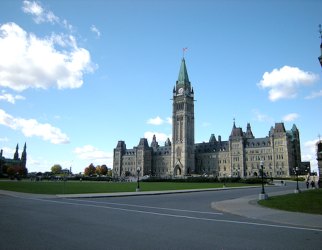
When we tallied up all the points, our nation’s capital regained its title as the best place in Canada to live. Ottawa-Gatineau was our number one city in both 2007 and 2008 before Victoria knocked it from its perch last year. Kingston and Burlington each moved up a spot from last year and came in at number two and three, respectively. Fredericton leapfrogged Moncton to hold down the number-four spot for 2010, while Brandon slipped past Winnipeg into seventh spot.
By separating out suburbs with 50,000 to 100,000 people, we got some interesting results. Although Montreal ranked a dismal 120th, the newly included suburb of Repentigny debuted at number six. This community of 76,000, located north of Montreal, did well in many of our affluence categories, and also boasts affordable housing, low crime and a healthy growth rate. Meanwhile, Newmarket, Ont., a similarly sized city north of Toronto, debuted on our list at number 15, even as Hogtown, which no longer benefits from the higher living standards in its suburbs, fell from number 79 to number 85.
Chris St. Clair wasn’t surprised at the results: after all, he has a close relationship to each of our top three cities. He and Susan love the climate in Kingston, our number two city, where they’ve lived since 1981. The beautiful, breezy summers make their hometown one of the best freshwater sailing destinations in the world, and the moderating effect of Lake Ontario keeps winters mild. Home to Queen’s University, one of the most prestigious schools in Canada, the city is also a centre of culture and learning, not to mention pedestrian-friendly, with affordable homes and more doctors per capita than any other Canadian city.
Every Friday at midnight, St. Clair makes the two-and-a-half hour drive to The Weather Network’s office in Oakville, right next door to our third-ranked city, Burlington. It’s an extreme commute, but since he stays overnight between shifts, he only makes the drive once a week and avoids rush hour. Burlington’s high home prices are balanced by its residents’ high incomes, and although it got dinged for air quality (Petro-Canada runs a nearby oil refinery) it was rewarded for its glorious climate and almost non-existent crime.
Finally, every two weeks, the St. Clairs make the 90-minute drive to Ottawa, where Susan manages a building in our number-one ranked city. Ottawa-Gatineau may not be the sexiest place in Canada, but the national capital is an outstanding place to live. “I can easily see it being number one,” says St. Clair. “It’s our showpiece. It’s generally kept in really good shape, and there is tons to do. If you’re an outdoors person you can enjoy the river in the summer, and there is great skiing less than 30 minutes from your home.” It turns out that, as the crossroads of our two founding cultures, Ottawa-Gatineau really does have something for everyone.
(For the full list and rankings, click here.)
If you want the scoop on which Canadian cities are the best places to live, Chris St. Clair is your go-to guy. After all, he crisscrosses the entire country every weekend. Well, not literally. St. Clair is a presenter on The Weather Network, where he gives country-wide forecasts to a national audience on Saturdays and Sundays.
During his long career as a broadcaster (and his former life as a commercial pilot), St. Clair has lived, worked or hung out in all of our major cities, so he knows what makes a great place to put down roots. He knows both the good and the bad in Halifax, for instance, since his family moved there when he was eight. “The summers are awesome, and the fall can be beautiful, but winter can be long and miserable,” he says.
St. Clair attended Acadia University in Wolfville, in Nova Scotia’s Annapolis Valley, where his father still lives. On his many trips back to the region, he’s noticed the types of changes that are happening in many communities across Canada. “Farmers are selling off their land and people are building large homes on large lots. Every time I go down, I’m stunned at how much development is taking place. It’s taking the rural charm out of it and making it a little more urban.”
His dad owned a construction company with an office in New Brunswick, so St. Clair has visited Fredericton and Moncton countless times. “Fredericton is a beautiful city. They’ve really done a nice job redeveloping their downtown.” He remembers being unimpressed with Moncton when he went there as child, but since then, thanks to one of the healthiest growth rates in the country, the city has come a long way.
While St. Clair has never lived in the West, he’s travelled throughout the Prairies, the Rocky Mountains and up and down the Pacific coast. One of his favourite cities is Victoria, but he wouldn’t live there—the houses are way too expensive. St. Clair and his wife Susan prefer small cities with lower living costs. Places like Kingston, Ont., where they settled almost 30 years ago. “I made a conscious choice not to live in Toronto. I couldn’t imagine living there and dealing with that traffic all the time.”
As St. Clair can attest, there are countless factors that contribute to a city’s livability. But in our annual survey, we go strictly by the numbers. There’s an old joke about a visitor to Lake Louise who quipped, “Sure, it’s beautiful. But if you take away the mountains, the lake, and the trees, what have you got?” In fact, that’s our starting point: we don’t give any marks for alpine scenery, sandy beaches, charming heritage buildings or other qualities that attract tourists. Instead, we focus on things we can quantify with hard data. We look at climate, because good weather really does make a city more livable. We concentrate on practical matters that are important for a person’s long-term happiness: affordable housing, prosperity, ease of travel, and good health care. We look for cities that show healthy growth, but aren’t sprawling out of control.
We refine our methodology each year, and we believe that this, MoneySense’s fifth annual ranking of Canada’s Best Places to Live, is better than ever. When we first started ranking communities, we covered fewer than a hundred—now we’re up to 179. We include every city or town of at least 10,000 people, but in the past, we lumped together communities under 100,000 in large metropolitan areas. This year, for the first time, we’ve separated out all suburbs of at least 50,000 people, which added a full 25 new cities to our survey.
As always, however, we don’t make it easy to score high marks. Although 105 points are up for grabs, only the top three places managed to score higher than 70. That’s because we rank each city from one to 179 in each category and assign full marks only to the winner. A city that ranks in the middle in a given category gets half the maximum, while the lowest-ranked gets only a tiny fraction of a point. In the end, the rankings look like the results of a bobsled race—some are separated by only a few tenths or even hundredths of a point.
The sunshine factor
As much as Canadians love to boast about our cold-hardiness, the fact is that most of us like mild temperatures and sun. That’s why weather is the most influential category in our rankings. We award a city up to six points in each of three areas: the amount of rain and snow, the number of wet days per year, and the number of days below freezing. Cities earn up to two additional points for air quality, as measured by the amount of ground-level ozone and particulate matter its residents are forced to breathe.
In the precipitation department, we look for the sweet spot of 700 mL of rain or snow annually. British Columbia communities lay at both extremes in this category: bone-dry communities in the interior such as Kelowna and Penticton scored low, as did soggy coastal cities such as Prince Rupert and Burnaby. Most of the cities that ranked high for fewest days with rain or snow were, not surprisingly, in Alberta and Saskatchewan. The Prairies are also home to many of our coldest cities. Thompson, Man., holds the title with a teeth-chattering 240 freezing days per year.
It turns out that the happy medium for Canadian weather is Southern Ontario. Of the top 20 point-getters when it comes to the three climate factors, 19 are in that region. Winters are cold, but most Ontarians don’t need to put a piece of cardboard in their car’s grille so the radiator won’t freeze; summers are hot, but not overly dry. “We actually get all four seasons here, and they’re all about as long as they’re supposed to be,” says Chris St. Clair.
Nice house if you can get it
Big cities like Vancouver, Edmonton and Toronto have many appealing traits, but affordable housing isn’t one of them. Although the real estate industry insists we’re not in a bubble, house prices continue to climb into nosebleed territory: the price tag on Vancouver’s average dwelling has risen to a staggering $762,100. (And if you just look at single, detached homes, some surveys say prices have hit $1 million.)
Of course, some people who live in Canada’s largest centres also have access to the highest-paying jobs. To reflect this, we also look at how long it would take a person to afford a home if they earned an average local salary. We award a total of 15 points in the housing category: 7.5 for average price, and 7.5 for the number of years it would take a local resident to buy a home.
The mix of stagnant salaries and rocketing house prices in 2009 had a big impact: Victoria’s affordable housing ranking slid from 147th to 174th, forcing it to give up last year’s top ranking and fall to number eight. Vancouver got hammered even worse. This year we separated out some of its surrounding suburbs and ranked them separately—and when we just looked at housing in the City of Vancouver, we found prices were soaring. Vancouver is now by far Canada’s least affordable city, with an average house price that’s almost 10 times what the typical household earns in a year. Vancouver also saw a big increase in unemployment this year, which helped sink the city from number five overall to number 29.
On the other hand, reasonably priced housing is a big reason why Moncton, Fredericton and Brandon, Man., have consistently finished high in our annual rankings. In New Brunswick’s capital, the average house price is just $125,000, less than twice the average annual salary.
Money matters
We’re not being judgmental, honest. We don’t mean to imply that people with higher incomes or nicer cars make better neighbours. But the fact is most people want to live in cities that are prosperous: affluent communities tend to be safer, cleaner and more pleasant than those that are weighed down by poverty and unemployment. To measure a city’s prosperity, we combine a number of factors and assign them a total of 25 points.
Few things can devastate a city faster than widespread joblessness: that’s why we give up to 10 points for high levels of employment. After several years of record-low unemployment in Canada, the national rate soared past 8% in 2009, and some cities were hit hard: several resource-based communities, many in Quebec and British Columbia, sit at the bottom of our list with unemployment rates between 13% and 22%. Montreal and Toronto, with unemployment rates well above the national average, also suffered.
At the other end of the spectrum, we found that cities that are stuffed full of bureaucrats, such as Ottawa and the provincial capitals, and those with a university or two, were pretty recession-proof. As other cities fell, they held their ground, so many ended up with higher rankings overall. When it came to job prospects, Ottawa jumped from 40th to 38th, for instance, and Fredericton leaped from 37th to 14th.
The recession has also hammered Ontario’s automotive industry, particularly Windsor and Oshawa, which scored low for their joblessness rates. Fittingly, though, both communities still have a lot of new cars on the road, so they did well in one of our other measures of prosperity. We awarded up to four points for a high percentage of new vehicles in a city, a sign that its people feel secure and confident about the future.
Income is also an important measure, of course. But earning a fat paycheque doesn’t make you prosperous if you’re forced to endure high costs for shelter, groceries and taxes. So while we measure the average salary in each city (four points), we also consider the percentage that qualifies as discretionary income (four points). This formula reveals one of the advantages of bordering major cities: residents of Markham, Whitby, Newmarket and several other communities score high because they enjoy the high salaries of Toronto’s job market without the sky-high housing costs of the city proper. We round things out by considering provincial income tax and sales tax rates (three points).
Life on the streets
There’s more to life than big bucks and fancy wheels, of course: the best places to live include a vibrant and growing population, access to good quality health care, safe streets and lots of places to have fun.
We start with population growth. When a city enjoys a steady flow of new people, that’s an indication of optimism and new opportunities. At the same time, many communities are growing so fast that their green space is disappearing, resources are strained, and they’re losing the charm that attracted people in the first place. So we look for a balance: highest marks went to cities that are growing at around 7.5% annually, two percentage points more than the national average. Cities growing much faster or slower ranked lower, while those with negative growth got a big fat zero.
Fighting commuter traffic day after day can be downright soul destroying. Not everyone can walk or bike to work, but a high percentage of people using two-legged or two-wheeled transportation indicates that a city is well planned, clean and safe. We admit to being surprised by the city that topped our list and took the full seven points in this category: Yellowknife. Okay, the thermometer dips below zero an average of 222 days a year and it only gets five hours of daylight in December. But the capital of the Northwest Territories is so compact and easy to get around that almost a quarter of its 19,000 residents walk or ride a bike to work. (Maybe it’s because their cars won’t start.)
We recognize that in many mid-size cities, residential and commercial areas are widely separated, but linked by excellent transit systems. This year we’ve tweaked our formula to reflect this: we now award five points (up from two) based on the number of residents who take buses or trains to work.
How easy is it to get health care in your hometown? We measure this by considering the number of doctors and other health professionals per capita. We add an extra point for a nearby hospital.
This year we’ve improved our measure of a city’s crime, which accounts for five points. We no longer look at the number of homicides per 100,000 people, which can be misleading. Rather, we use total crime rates, violent crime rates, and a new Statistics Canada scale that judges the severity of crime in a city.
Finally, we attempt to measure the cultural and recreational life of a city in an objective way. When we started our annual rankings five years ago, we awarded bonus points to capital cities, and those with pro sports teams and major attractions. But we listened to readers who took issue with our assumptions. Why, they asked, is it better to have an NHL hockey team than a vibrant music scene or fabulous skiing? So we’ve changed our methodology: we now measure the percentage of a city’s residents who hold jobs in the arts, culture, sports and recreation and assign up to five points to those with the largest proportion. Montreal, Vancouver and Toronto all ranked high in this category, but so did the mountain paradise of Canmore, Alta., and Stratford, Ont., home to a world-class Shakespeare festival.
Capital gains
When we tallied up all the points, our nation’s capital regained its title as the best place in Canada to live. Ottawa-Gatineau was our number one city in both 2007 and 2008 before Victoria knocked it from its perch last year. Kingston and Burlington each moved up a spot from last year and came in at number two and three, respectively. Fredericton leapfrogged Moncton to hold down the number-four spot for 2010, while Brandon slipped past Winnipeg into seventh spot.
By separating out suburbs with 50,000 to 100,000 people, we got some interesting results. Although Montreal ranked a dismal 120th, the newly included suburb of Repentigny debuted at number six. This community of 76,000, located north of Montreal, did well in many of our affluence categories, and also boasts affordable housing, low crime and a healthy growth rate. Meanwhile, Newmarket, Ont., a similarly sized city north of Toronto, debuted on our list at number 15, even as Hogtown, which no longer benefits from the higher living standards in its suburbs, fell from number 79 to number 85.
Chris St. Clair wasn’t surprised at the results: after all, he has a close relationship to each of our top three cities. He and Susan love the climate in Kingston, our number two city, where they’ve lived since 1981. The beautiful, breezy summers make their hometown one of the best freshwater sailing destinations in the world, and the moderating effect of Lake Ontario keeps winters mild. Home to Queen’s University, one of the most prestigious schools in Canada, the city is also a centre of culture and learning, not to mention pedestrian-friendly, with affordable homes and more doctors per capita than any other Canadian city.
Every Friday at midnight, St. Clair makes the two-and-a-half hour drive to The Weather Network’s office in Oakville, right next door to our third-ranked city, Burlington. It’s an extreme commute, but since he stays overnight between shifts, he only makes the drive once a week and avoids rush hour. Burlington’s high home prices are balanced by its residents’ high incomes, and although it got dinged for air quality (Petro-Canada runs a nearby oil refinery) it was rewarded for its glorious climate and almost non-existent crime.
Finally, every two weeks, the St. Clairs make the 90-minute drive to Ottawa, where Susan manages a building in our number-one ranked city. Ottawa-Gatineau may not be the sexiest place in Canada, but the national capital is an outstanding place to live. “I can easily see it being number one,” says St. Clair. “It’s our showpiece. It’s generally kept in really good shape, and there is tons to do. If you’re an outdoors person you can enjoy the river in the summer, and there is great skiing less than 30 minutes from your home.” It turns out that, as the crossroads of our two founding cultures, Ottawa-Gatineau really does have something for everyone.
Share this article Share on Facebook Share on Twitter Share on Linkedin Share on Reddit Share on Email

Moving to Canada often means rebuilding your credit history from scratch. One newcomer explains the hidden challenges, and the...

Placing a few bets during the World Cup may feel low-stakes, but experts say it’s easy to lose track...

Thinking of selling your home without a Realtor? Here’s what DIY sellers need to know about commissions, legal risks,...

Short-term rentals can help cover housing costs, but experts say many first-time hosts underestimate the legal, financial, and lifestyle...

As falling home prices leave more Canadians underwater on their mortgages, experts explain the refinancing and renewal options available.

Travel scams are rising with AI, from fake booking sites and rentals to phishing emails and stolen loyalty points....

Buying a home can change your life insurance needs fast. Here’s how much coverage young Canadians may actually need—and...

Bank of Canada holds its 2.25% rate for a fourth time amid inflation risks from oil prices, affecting mortgages,...