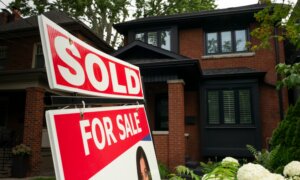
The ultimate goal for many immigrants who come to Canada is to buy their own home. “One of the first things my Chinese clients want to do when they land is to buy a house,” says RBC’s Wendy Seto. “They want to provide a feeling of home for their family. Plus, most of the Canadian homes are very affordable for Chinese people because it’s a lot cheaper than back home.”

Most immigrants start off renting an apartment. As a general rule, the Canada Mortgage and Housing Corporation (CMHC) says that your entire monthly housing costs—rent as well as utilities such as heat, electricity and water—should be less than 30% of your household income before taxes. Before renting, ask if utilities are included in the rent, and if not, how much they will cost. Check to see that everything in the apartment works properly, such as front door locks, taps, toilets and appliances.

Before you sign the lease, make sure you understand everything in it. It’s common for a tenant to sign a lease agreeing to rent the apartment for one year, and after that the lease is renewed monthly. You usually need to give the landlord a damage deposit equivalent to one month’s rent to cover potential damage. You should ask to get this deposit back if the landlord finds no damage when you move out.

Can you afford to buy?

If you’re looking to buy a home, make sure you’re in it for the long haul. Rising real estate prices in the last decade have convinced many people that home prices can only go up, but there’s no guarantee they will always rise. Real estate is usually a good investment because if you stick with it, you will eventually pay off your mortgage and live rent-free, but you shouldn’t necessarily assume that your home’s value will zoom upwards.

When figuring out how much you can spend on a home, remember that your monthly housing costs shouldn’t be more than 32% of your monthly income before taxes—the Canada Mortgage and Housing Corporation (CMHC) has tools on its website to help you with the calculations. You’ll also want to understand how realtor fees work. In Canada, the buyer doesn’t directly pay the realtor: the commission is paid by the seller and divided between the buying and selling realtors.

When immigrant Fernando Margueirat learned that typically realtors in Canada get 5% of the sale price—a much higher rate than his home country of Argentina—he changed his home-hunting strategy. “Originally I was going to start by buying a small apartment and then sell it three or four years later,” says Margueirat. “When I realized that 5% would be lost in commissions, I decided to start with something bigger.”

Homebuyers should also factor in another 1.5% to 4% for other closing costs, such as lawyer or notary fees and land transfer taxes. You’ll also want to spend another $400 to $800 to have the property inspected before you close the deal to make sure there are no major problems with the house.

You can buy a home with just a 5% down payment and a 30-year mortgage, but financial educator Jim Yih advises against it. “Like any first-time home buyer, immigrants need to be careful they don’t get overextended. I don’t think you should buy a home unless you can put 10% down. Make sure you can afford the payments and more.” If you put less than 20% down, you’ll need to pay for mortgage loan insurance that protects the bank if you default: with 10% down on a $350,000 home, expect an extra $7,000 or so in fees.