What would Buffett buy?
Warren Buffett, the Oracle of Omaha, is the world’s most successful value investor. Here’s how you can follow his strategies to find your own bargain stocks.


Advertisement
Warren Buffett, the Oracle of Omaha, is the world’s most successful value investor. Here’s how you can follow his strategies to find your own bargain stocks.
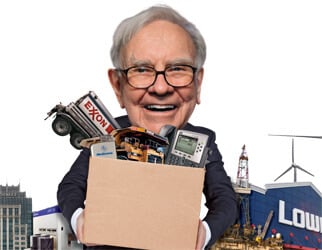 Warren Buffett is one of the best investors of our age and his extraordinary record spans many decades. Such is his renown as both an investor and businessman that even presidents seek his advice on economic matters.
But Buffett isn’t shy about sharing the factors behind his investment success. While it’s true he hasn’t detailed his approach in a book of his own—many other authors have attempted to do so on his behalf—he has gotten close via his many letters to investors that accompany Berkshire Hathaway’s annual report each year.
Buffett became CEO of Berkshire Hathaway when it was a struggling textile company in the mid-1960s. Since then it has become a colossal conglomerate with large insurance and stock holdings. After obtaining control, Buffett grew Berkshire Hathaway’s book value by an average of 20% a year from 1965 to 2011. That’s an astonishingly good record.
Buffett has always been a value investor and attributes much of his success to this strategy. What is value investing? It’s the practice of buying businesses with high intrinsic values for low prices. Value investors are bargain hunters. They tend to avoid hot stocks and instead load up on dull, even hated names that are on sale. Later I’ll share the names of 20 stocks Buffett might be interested in, but first let’s take a closer look at the types of strategies he’s become known for.
There are many flavours of value investing and its practitioners specialize in a variety of niches. After all, good values can be found in many nooks and crannies. For instance, some like to buy high-quality assets at moderate prices. Others specialize in weak and struggling firms at lower prices. A few are financial scrap dealers who trade the securities of distressed or bankrupt companies.
Those who follow Buffett know his value style has evolved over time. He started his career looking for lesser-known companies trading at bargain prices, but more recently has favoured larger, higher quality names at reasonable prices. The change was necessary because he now manages many billions of dollars at Berkshire Hathaway: buying small firms just doesn’t make much difference to his overall results anymore.
Most will find Buffett’s original style easier to master. In the early days he employed more common value investing methods, whereas he currently factors in the qualitative features of a business more heavily.
It also helps that Buffett’s early career was highly influenced by his teacher and mentor of whom we know a great deal. Buffett finished his education at the Columbia Business School in New York because he wanted to take classes from Benjamin Graham. At the time Graham was already a famous investor in his own right. He was also an influential professor, and many of his students subsequently went on to become great investors themselves.
Warren Buffett is one of the best investors of our age and his extraordinary record spans many decades. Such is his renown as both an investor and businessman that even presidents seek his advice on economic matters.
But Buffett isn’t shy about sharing the factors behind his investment success. While it’s true he hasn’t detailed his approach in a book of his own—many other authors have attempted to do so on his behalf—he has gotten close via his many letters to investors that accompany Berkshire Hathaway’s annual report each year.
Buffett became CEO of Berkshire Hathaway when it was a struggling textile company in the mid-1960s. Since then it has become a colossal conglomerate with large insurance and stock holdings. After obtaining control, Buffett grew Berkshire Hathaway’s book value by an average of 20% a year from 1965 to 2011. That’s an astonishingly good record.
Buffett has always been a value investor and attributes much of his success to this strategy. What is value investing? It’s the practice of buying businesses with high intrinsic values for low prices. Value investors are bargain hunters. They tend to avoid hot stocks and instead load up on dull, even hated names that are on sale. Later I’ll share the names of 20 stocks Buffett might be interested in, but first let’s take a closer look at the types of strategies he’s become known for.
There are many flavours of value investing and its practitioners specialize in a variety of niches. After all, good values can be found in many nooks and crannies. For instance, some like to buy high-quality assets at moderate prices. Others specialize in weak and struggling firms at lower prices. A few are financial scrap dealers who trade the securities of distressed or bankrupt companies.
Those who follow Buffett know his value style has evolved over time. He started his career looking for lesser-known companies trading at bargain prices, but more recently has favoured larger, higher quality names at reasonable prices. The change was necessary because he now manages many billions of dollars at Berkshire Hathaway: buying small firms just doesn’t make much difference to his overall results anymore.
Most will find Buffett’s original style easier to master. In the early days he employed more common value investing methods, whereas he currently factors in the qualitative features of a business more heavily.
It also helps that Buffett’s early career was highly influenced by his teacher and mentor of whom we know a great deal. Buffett finished his education at the Columbia Business School in New York because he wanted to take classes from Benjamin Graham. At the time Graham was already a famous investor in his own right. He was also an influential professor, and many of his students subsequently went on to become great investors themselves. Graham’s record was impressive. He ran an investment partnership with Jerome Newman that provided average annual returns of nearly 15% after fees from 1934 until it was wrapped up in 1956. Over the period Graham bested the markets by 2.5 percentage points a year on average, after fees.
Even though Graham passed away in 1976, he remains a giant in the field and, in some ways, is more influential than Buffett. Graham’s books, The Intelligent Investor and Security Analysis, are still in print and occupy a treasured place on the bookshelves of professional investors worldwide. Mind you, it’s also fair to say Buffett has outpaced his teacher’s record, both as an investor and as a businessman.
Importantly, Graham provided investors with concrete guidance and several easy-to-use rules of thumb in his books and other writings. His methods have remained remarkably effective through the years and have a place in the toolbox of most value investors to this day. I’ve personally used them for a long time to very good effect. Here’s a list of books for value investors who want to learn more.
Graham’s record was impressive. He ran an investment partnership with Jerome Newman that provided average annual returns of nearly 15% after fees from 1934 until it was wrapped up in 1956. Over the period Graham bested the markets by 2.5 percentage points a year on average, after fees.
Even though Graham passed away in 1976, he remains a giant in the field and, in some ways, is more influential than Buffett. Graham’s books, The Intelligent Investor and Security Analysis, are still in print and occupy a treasured place on the bookshelves of professional investors worldwide. Mind you, it’s also fair to say Buffett has outpaced his teacher’s record, both as an investor and as a businessman.
Importantly, Graham provided investors with concrete guidance and several easy-to-use rules of thumb in his books and other writings. His methods have remained remarkably effective through the years and have a place in the toolbox of most value investors to this day. I’ve personally used them for a long time to very good effect. Here’s a list of books for value investors who want to learn more.
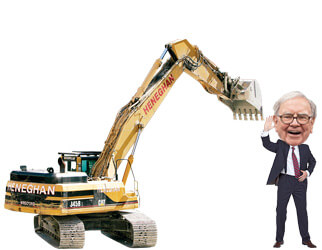 Starting with safety, I turn to Buffett’s love of stocks with large moats. Naturally, everyone has a different definition of what constitutes a good moat. Morningstar.com has a methodology it uses to assign an “Economic Moat Rating” to U.S. companies. It’s a handy place to start. (Fear not, I’ll explore Canadian stocks next issue.)
When it comes to moats, only the best will do, so I began with U.S. stocks rated as having wide moats by Morningstar. There are many types of moat on display. Thus, Caterpillar has a good reputation for providing quality products backed by strong dealer support: critically important when downtime is costly. On the other hand, Cisco dominates in network equipment, where it enjoys a technological edge.
Many U.S. stocks have wide moats so to narrow the list I added in a little Graham by focusing on the lowest combination of P/E and P/B ratios. Stocks with two absolutely low ratios make the cut but so do some with one low ratio and one slightly higher ratio. In this way I’m opting for a relative rather than an absolute value approach. So while Intel trades at a low P/E of 11, its P/B ratio is a little high at 2.7. But Intel’s real worth is primarily a function of its intellectual property, which forms the foundation for its moat.
Buffett’s own Berkshire Hathaway currently passes the test, which shouldn’t surprise his fans: Buffett has been adding wide-moat companies for years. His firm recently announced it will buy back its stock when it trades under 1.1 times book value. It currently trades just a bit higher at 1.2 times book value, which is still quite attractive.
Will these stocks live up to the reputations of the masters? Only time will tell but I have high hopes.
This list is only a starting point for serious investigation. Before buying any of these stocks, make sure the company’s situation hasn’t changed in some important way. Read the latest press releases, regulatory filings and news more broadly. Poke and prod each stock closely. Is its moat being eroded by new technology? Is it making unwise acquisitions? Are there problems not readily apparent in the numbers? Be sure to do your own due diligence before heading to the market.
Starting with safety, I turn to Buffett’s love of stocks with large moats. Naturally, everyone has a different definition of what constitutes a good moat. Morningstar.com has a methodology it uses to assign an “Economic Moat Rating” to U.S. companies. It’s a handy place to start. (Fear not, I’ll explore Canadian stocks next issue.)
When it comes to moats, only the best will do, so I began with U.S. stocks rated as having wide moats by Morningstar. There are many types of moat on display. Thus, Caterpillar has a good reputation for providing quality products backed by strong dealer support: critically important when downtime is costly. On the other hand, Cisco dominates in network equipment, where it enjoys a technological edge.
Many U.S. stocks have wide moats so to narrow the list I added in a little Graham by focusing on the lowest combination of P/E and P/B ratios. Stocks with two absolutely low ratios make the cut but so do some with one low ratio and one slightly higher ratio. In this way I’m opting for a relative rather than an absolute value approach. So while Intel trades at a low P/E of 11, its P/B ratio is a little high at 2.7. But Intel’s real worth is primarily a function of its intellectual property, which forms the foundation for its moat.
Buffett’s own Berkshire Hathaway currently passes the test, which shouldn’t surprise his fans: Buffett has been adding wide-moat companies for years. His firm recently announced it will buy back its stock when it trades under 1.1 times book value. It currently trades just a bit higher at 1.2 times book value, which is still quite attractive.
Will these stocks live up to the reputations of the masters? Only time will tell but I have high hopes.
This list is only a starting point for serious investigation. Before buying any of these stocks, make sure the company’s situation hasn’t changed in some important way. Read the latest press releases, regulatory filings and news more broadly. Poke and prod each stock closely. Is its moat being eroded by new technology? Is it making unwise acquisitions? Are there problems not readily apparent in the numbers? Be sure to do your own due diligence before heading to the market.
Share this article Share on Facebook Share on Twitter Share on Linkedin Share on Reddit Share on Email

Whether you want the highest interest rate or no service fees, these savings accounts will meet your needs.

Find the best GIC rates in Canada. Plus, everything you need to know about how they work.

Which ETFs should you invest in? Which ones best suit your risk tolerance? What about personal ethics? Check out...

Q4 shows mixed results across sectors: Canadian Natural and Pet Valu post gains, while George Weston and Canada Packers...

From child care deductions to tuition credits, several tax breaks can help parents lower their tax bill. What families...

Used car prices remain high in 2026, pushing buyers to put down less and finance more. Here’s how insurance...

Bitcoin extends losses, down 47% since October 2025. When will the crypto bear market reverse, and what does the...

Crypto profits aren’t always tax-free. Here’s how the CRA taxes cryptocurrency transactions, mining and staking, and overseas gains.

Low trading volume does not necessarily mean low liquidity. Here’s what actually determines how easy it is to buy...

Vanguard’s VRIF ETF is tilting toward bonds to provide retirees stable income, balancing caution with a 4% annual payout...