Do car-sharing programs really save you money?
There are a growing number of services cropping up in Canadian cities that give you access to a car for an hourly fee. But is it really cheaper than buying your own vehicle?


Advertisement
There are a growing number of services cropping up in Canadian cities that give you access to a car for an hourly fee. But is it really cheaper than buying your own vehicle?
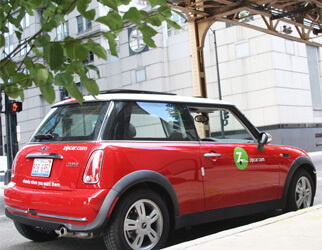 There are a growing number of services cropping up in Canadian cities that give you access to a car for an hourly fee. But is it really cheaper than buying your own vehicle? We compared the rates for two car-sharing companies, Zipcar and Car2Go, with the cost of owning a Honda Civic EX. It turns out car-sharing is only cheaper if you use the vehicle for a few short trips each week. If you need a car more than two or three times a week, it’s cheaper to get your own set of wheels.
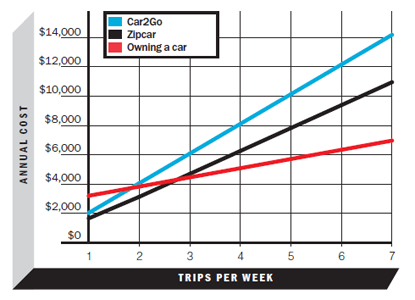 *Assumes a three-hour 40-km trip. Car-sharing sign-up fees are factored in. zipcar cost based on extra value plan prices for a sedan in Toronto. Car ownership costs are based on Edmunds.com data. Costs are amortized over eight years and include purchase, gas, insurance and maintenance.
Share this article Share on Facebook Share on Twitter Share on Linkedin Share on Reddit Share on Email

Banks are adopting AI for everything from customer service to lending, but scaling the technology safely remains a challenge.

Apple's foray into the foldable phone market is a lot more expensive than the co-revealed iPhone 18 Pro.

What are the best streaming services in Canada? Which credit cards offer you streaming perks? Find out here.

Canadians are increasingly buying local amid the trade war, but some Canadian companies say retailers are slow to make...

New laptops are expensive; here's what you should consider as you cautiously invest in a used laptop.

A recent report found that more Canadians are choosing used technology due to cost and environmental concerns, but major...

Peru, Bolivia, and Argentina offer incredible experiences at affordable prices. Here’s how Canadians can plan the trip without overspending.

From airfare to gifts, destination weddings add up quickly. Here's how to weigh the costs, plan your budget, and...

High gas prices are driving more Canadians to rent EVs and hybrids, but limited inventory means many travellers may...