
Why young Canadians are staying in (and what it’s really about)
From dinner parties to movie nights, staying in is on the rise. Explore why young Canadians are embracing the homebody economy—and what they might be missing.


Advertisement
From dinner parties to movie nights, staying in is on the rise. Explore why young Canadians are embracing the homebody economy—and what they might be missing.

Something has shifted in how young Canadians are spending their Friday nights. Across TikTok and Instagram, a new kind of content has taken over: candlelit dinner parties in tiny apartments, game nights, backyard hangs with a $12 bottle of wine. The aesthetic is cosy. The vibe is intentional. And the economics, whether anyone says so out loud or not, make a lot of sense right now.
The numbers back it up. A 2025 Samsung Canada survey found that 85% of Canadians now prefer movie nights at home to going out, with 55% saying they’d rather invest in their home entertainment setup than spend on outside experiences. According to Restaurants Canada’s 2025 Foodservice Facts report, 81% of Canadians aged 18 to 34 have cut back on restaurant visits because of the cost of living—higher than the national average of 75%.
For Gen Z and younger millennials especially, the bar—literally and figuratively—is increasingly somewhere inside their own four walls. Call it the homebody economy: a growing preference for low-cost, high-comfort social experiences at home over expensive nights out.
But is this a cultural shift, or just a response to the fact that going out has become unaffordable? The answer, according to consumer behaviour researcher Dr. Cindy Chan, is probably both.
“I think it is both,” says Chan, an associate professor of marketing at the University of Toronto Scarborough who studies how people derive value from spending and social experiences. “Things are more expensive and people are having to make decisions on where to cut back. But also, the value we get from going out of the home may not provide the same value to this generation that it did in the past.”
Part of that value equation has shifted thanks to technology. Streaming has removed one of the biggest reasons people leave the house: access to current entertainment. Food delivery has done the same for restaurants. The friction of a night out has gone up while the rewards of staying in have multiplied.
“People may perceive there to be a lot more hurdles to getting out of the house now,” Chan says, “when you can get a lot of the rewards in your own home that you would have had to leave your home for in the past.”
There’s also a generational sobriety factor at play. Restaurants Canada’s data shows that 41% of Canadians say their alcohol consumption has dropped over the past year, with a third of those citing cost as a reason—a trend Chan sees reshaping where and how people want to socialize. The bar-hopping social infrastructure that defined earlier generations’ twenties simply holds less appeal when you don’t drink.
Chan also points to something deeper driving the cosiness trend: emotional need. The world feels stressful amid unstable job markets, geopolitical uncertainty, and a housing crisis that shows no sign of resolving. Staying in, surrounded by your closest people, offers something a crowded bar can’t.
“People are seeking comfort,” she says. “One response is safety and cosiness. People want to feel safe, they want to feel warm, they want to feel relaxed.” The cosy-night-in content flooding TikTok, she argues, resonates not because it tells people to save money, but because it offers an emotional alternative. “That is something much more experiential and emotional. If that’s the element people are responding to, it may be that they just want to feel calm and not stressed out, and connected with the people around them.”
The math is hard to argue with, too. A dinner party for four might run $60 to $80 in groceries. The same four people at a restaurant, with drinks and tip, could easily surpass $300.
Still, Chan is careful not to romanticize the stay-in shift too much. Her research sits at the intersection of consumer behaviour and social relationships, and she’s thought a lot about what gets quietly lost when people stop venturing out.
There’s the concept of “weak ties”, the low-stakes connections with acquaintances, neighbours, your regular barista, that research shows matter more than we think. Research by Nicholas Epley at the University of Chicago Booth School of Business found that people consistently underestimate how much they’ll enjoy a conversation with a stranger and overestimate how awkward it will be.
Separate research by psychologist Amit Kumar at the University of Texas at Austin found that these kinds of community-level interactions also make people more likely to act prosocially, such as donating to a local charity or helping a neighbour, because they reinforce a sense of belonging.
“If you completely lose your weak ties,” Chan says, “you lose your sense of community. You no longer feel that you’re part of the neighbourhood, because you’re not leaving your house, not bumping into a coworker at a coffee shop, or having those moments of potential connection.”
She also raises a quieter concern about a generation whose teenage social development was interrupted by COVID. The skills involved in small talk, in striking up a conversation with a stranger, in being a little uncomfortable but surviving it—those tend to get pretty rusty without practice. When you stop having those small, everyday social moments, and never get to surprise yourself with, “Huh, that was actually kind of nice,” going out starts to feel more daunting than it really is. The gap between the comfort of your couch and the anxiety of being out in the world just keeps widening.
None of this means the homebody economy is inherently bad. Chan’s take is measured: staying in with people you love, in an environment that allows for real conversation and connection, is genuinely valuable. The concern is about balance.
“I wouldn’t want people to lose sight of the benefits that can come from also experiencing things out of the home,” she says. “You have to think holistically: where do I want the joy and the connection to come from in my life? And am I making choices that ensure those needs are still met, in a financially responsible way?”
The cozy night in has its place. Just maybe leave the door open once in a while, too.
Share this article Share on Facebook Share on Twitter Share on Linkedin Share on Reddit Share on Email

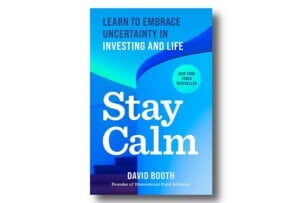
David Booth’s Stay Calm lays out the latest, highly convincing case for sticking to indexing and doing less as an investor.

We’re looking at how Bitcoin and various other cryptocurrencies have fared in the second half of 2026.

Credit Canada found that 68% of Canadians don’t know how much of their budget goes toward housing. Those who...

There are still unique advantages to spousal RRSP accounts, even after the advent of pension splitting.

Yes, you can execute this combination of mortgage repayment and investing using ETFs. Your options depend on risk and...

Some Canadians will receive a payment from Veterans Affairs Canada (VAC) on Monday, September 28, 2026. The governmental department...

Financial experts reveal the money mistakes they made in their 20s and the lessons they wish they had learned...

Some expenditures stand in for the work required to actually reach our goals. Think of those before you swipe...

When bond yields rise, the effects ripple through the rest of the economy, and Canadians should take note. ...

What retirement experts have to say now about surviving an untimely market crash.
