Why your bond ETF isn’t losing money
The way fixed income ETF returns are displayed can make investors think they are losing money


Advertisement
The way fixed income ETF returns are displayed can make investors think they are losing money
| Symbol | Quantity | Book Value | Market Value | Change ($) | Change (%) |
| ZAG | 500 | $8,185.00 | $7,850.00 | -$335.00 | -4.09% |
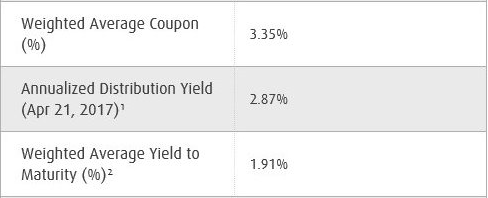 That means if interest rates don’t change, you should expect the price of this fund to decline by roughly 1.44% (that’s 3.35% minus 1.91%) a year. It will never be that tidy because interest rates change constantly, but the key point is that any bond ETF filled with high-coupon premium bonds should be expected to fall in price over time.
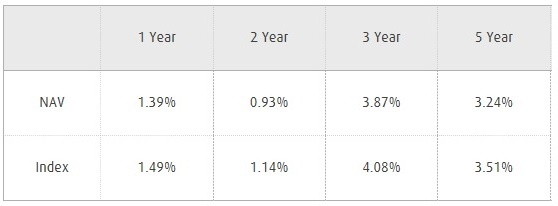 One important note: whenever ETFs report their returns, they assume all cash distributions are reinvested immediately. With an ETF this is impossible, even if you are using a dividend reinvested plan, because some portion of the interest or dividends will always end up as part of your cash balance. So your personal rate of return will never be precisely what’s reported on the provider’s website. But it will be close enough. And at the very least, you will no longer believe you’re losing money with your bond ETF during years when you’re actually netting a gain.
This first appeared on CanadianCouchPotato.com
One important note: whenever ETFs report their returns, they assume all cash distributions are reinvested immediately. With an ETF this is impossible, even if you are using a dividend reinvested plan, because some portion of the interest or dividends will always end up as part of your cash balance. So your personal rate of return will never be precisely what’s reported on the provider’s website. But it will be close enough. And at the very least, you will no longer believe you’re losing money with your bond ETF during years when you’re actually netting a gain.
This first appeared on CanadianCouchPotato.com
Share this article Share on Facebook Share on Twitter Share on Linkedin Share on Reddit Share on Email

Low trading volume does not necessarily mean low liquidity. Here’s what actually determines how easy it is to buy...

Find the best GIC rates in Canada. Plus, everything you need to know about how they work.

Vanguard’s VRIF ETF is tilting toward bonds to provide retirees stable income, balancing caution with a 4% annual payout...

Which ETFs should you invest in? Which ones best suit your risk tolerance? What about personal ethics? Check out...
Canada’s banking sector sees higher Q1 profits and strong financial performance in the latest earnings reports.

From big profit jumps at Enbridge and Cenovus to strong holiday sales at Canadian Tire, see how major Canadian...

In maintaining your planned allocations in a portfolio of ETFs, consistency matters more than precision.

Learn how inheriting a US IRA or 401(k) works for spouses and non-spouses, including taxes, withdrawal rules, and opportunities...

Preparing to support yourself in your elder years is a cultural norm in Canada that newcomers must adapt to....

Find the 2026 Canadian federal and provincial tax brackets for 2025 income. Learn how marginal tax rates work, estimate...
Very helpful in understand why the NAV of a Bank Of Montreal inflation adjusted etf has continued to decrease in value. The BMO fund symbol ZTIP.F is comprised of short duration U.S. TIPS 0 to 5 years, with dividends paid quarterly. Since it is a Canadian Fund of U.S. Treasurys and are hedged to the Canadian Dollar, I suppose the big increase between the USD and CAD have accounted for some of the unit price decrease. But in the same token would expect the dividend to reflect an increase coming back. Obviously depends on how well the hedge book is handled.