
How to confirm your CPP pension
CPP and QPP are cornerstones of retirement income for Canadians. How do you confirm what you are entitled to and make sure it is accurate?


Advertisement
CPP and QPP are cornerstones of retirement income for Canadians. How do you confirm what you are entitled to and make sure it is accurate?

How do I know if I’m receiving the correct amount of CPP?
—Flora
Most people who work in Canada between ages 18 and 65 will have some entitlement to the Canada Pension Plan (CPP). Employees and their employers make payroll contributions to the pension. Self-employed people contribute the employee and employer portion when they file their tax returns.
You can request a history of CPP contributions from Service Canada online using your My Service Canada Account (MSCA), Flora.
If you have worked only in Québec, currently live in Québec, or you live abroad but your last province of residence was Québec, you can request a Digital Statement of Participation from Retraite Québec My Account. The Québec Pension Plan (QPP) program is the provincial equivalent of the CPP in Québec.
These statements provide a historical summary of your CPP/QPP pensionable earnings and contributions, as well as an estimate of your retirement pension.
If you want to be certain the contributions are accurate, Flora, you need to review your past tax returns. If any of the contribution figures are inaccurate, you should contact Service Canada or Retraite Québec.
Deadlines, tax tips and more
Employees would need to provide copies of their T4 slips to support their past contributions. Self-employed workers would have to provide their tax returns with their calculated CPP/QPP contributions along with their Notices of Assessment.
Both the CPP and QPP pensions are based primarily on historical contributions. In particular, how much you contributed and for how many years.
If you have years with low or no contributions, your pension may be increased by the dropout provision that removes up to 8 years of your lowest earnings or using your best 40 years of earnings.
The main considerations that can reduce or increase your CPP or QPP, Flora, are:
Working while receiving your pension. There is a post-retirement benefit (PRB) if you are under 70 and working and contributing while receiving your pension.
Divorce or separation. Often, when a couple divorces or separates, there is a credit splitting application made to equalize contributions made by both parties during their relationship. This can increase the pension of a lower income spouse or decrease the pension of a higher income spouse.
Periods of raising children. There is a child-rearing provision for parents who had low or no earnings while caring for children under the age of 7 to exclude those years from the calculation.
Periods of disability. If you were disabled and receiving a CPP disability pension, that period can be excluded from calculating the base component of the CPP. You can also receive credits for the time you were disabled based on 70% of your earnings for the 6 years prior to your disability.
Pension sharing with a spouse or common law partner. You can apply to share some of your pension with your spouse based on your contributions and theirs during your marriage or common-law cohabitation. This can decrease the pension of a higher income spouse or increase the pension of a lower income spouse.
There are several factors that can impact your CPP or QPP retirement pension. Although mistakes are not common, Flora, it is easy and advisable to check your Statement of Contributions or Statement of Participation with Service Canada or Retraite Québec.
If nothing else, it is good to know what your CPP/QPP retirement pension might amount to in the future as part of your retirement planning.
Share this article Share on Facebook Share on Twitter Share on Linkedin Share on Reddit Share on Email

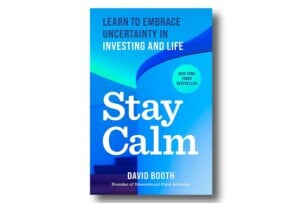
David Booth’s Stay Calm lays out the latest, highly convincing case for sticking to indexing and doing less as an investor.

We’re looking at how Bitcoin and various other cryptocurrencies have fared in the second half of 2026.

Credit Canada found that 68% of Canadians don’t know how much of their budget goes toward housing. Those who...

There are still unique advantages to spousal RRSP accounts, even after the advent of pension splitting.

Yes, you can execute this combination of mortgage repayment and investing using ETFs. Your options depend on risk and...

Some Canadians will receive a payment from Veterans Affairs Canada (VAC) on Monday, September 28, 2026. The governmental department...

Financial experts reveal the money mistakes they made in their 20s and the lessons they wish they had learned...

Some expenditures stand in for the work required to actually reach our goals. Think of those before you swipe...

When bond yields rise, the effects ripple through the rest of the economy, and Canadians should take note. ...

What retirement experts have to say now about surviving an untimely market crash.