
The best ETFs to pair with an asset allocation fund
Asset allocation ETFs are designed as all-in-one portfolios, but investors can strategically match them with other ETFs to add factors, dial up risk, or diversify further.


Advertisement
Asset allocation ETFs are designed as all-in-one portfolios, but investors can strategically match them with other ETFs to add factors, dial up risk, or diversify further.

As of September 3rd, Cboe Canada’s exchange-traded fund screener shows 2,055 ETFs on the Canadian market. Of those, 136 are classified as multi-asset ETFs. A substantial number of these are what investors commonly call asset allocation ETFs.
There isn’t a universal definition for an asset allocation ETF, so allow me to propose one. These are all-in-one portfolios, typically structured as funds of funds, that provide broad exposure to Canadian, U.S., international developed, and emerging market equities. Depending on the strategy, bonds may be included as well.
The result is a range of options for different risk tolerances. You can find 100% equity portfolios, 80% equity and 20% bond portfolios, traditional 60/40 portfolios, and progressively more conservative variations such as 40/60 or 20/80. The underlying ETFs are typically passive index trackers, although some providers incorporate active management or factor strategies, and management expense ratios (MERs) tend to be relatively low.
These ETFs have become extremely popular with Canadian investors. Some even have dedicated online communities. On Reddit, for example, you’ll find r/justbuyVGRO and r/JustBuyXEQT, where the names more or less summarize the philosophy: pick an appropriate all-in-one portfolio, regularly contribute, reinvest the distributions, make good use of tax-sheltered accounts, and stay the course.
For many investors, that’s probably enough. You could have considerable success investing in an asset allocation ETF for decades without adding anything else. But if you want to tinker with your portfolio slightly, there are ways to do so without resorting to individual stock picking or frequent active trading. A core-and-satellite approach keeps an asset allocation ETF as the foundation of the portfolio while adding smaller ETF positions around it for exposures the core fund does not provide.
I think there are three reasonably sensible ETF categories to consider pairing with an asset allocation ETF. Importantly, each provides exposure that generally isn’t already represented in a conventional stock-and-bond asset allocation ETF, limiting unnecessary overlap while potentially addressing some of the shortcomings of an otherwise very solid portfolio.
Most asset allocation ETFs do not own cryptocurrency. I say most because there are some notable exceptions. Fidelity’s all-in-one ETFs, for example, include modest cryptocurrency allocations.
The Fidelity All-in-One Growth ETF (FGRO) currently has approximately 2.6% allocated to the Fidelity Advantage Bitcoin ETF (FBTC). Fidelity has previously pointed out that because cryptocurrency is so volatile, even a relatively small allocation can meaningfully affect returns, both positively and negatively.
There are signs that other Canadian ETF providers are moving in the same direction. The recently launched iShares Equity Plus Bitcoin ETF Portfolio (IBQT) is another example. Its equity allocation closely resembles the geographic mix found in the iShares Core Equity ETF Portfolio (XEQT), but approximately 3% is carved out for exposure to the iShares Bitcoin ETF (IBIT).
Of course, you don’t need an all-in-one ETF with bitcoin built into it. You could simply pair a spot bitcoin ETF with your existing asset allocation ETF. IBIT, for example, provides direct bitcoin exposure for a 0.33% management expense ratio (MER).
The important consideration is position sizing. Cryptocurrency’s volatility means you don’t necessarily need much of it to affect portfolio performance. I think the roughly 3% allocation used by some professionally constructed portfolios is a reasonable reference point.
Asset allocation ETFs are already broadly diversified across stocks and, depending on the strategy, bonds. Their equity allocations can span all 11 market sectors, large-, mid- and small-cap stocks, and Canadian, U.S., international developed and emerging markets.
What they generally don’t contain is direct commodity exposure. There may be plenty of commodity-related equities, particularly Canadian energy and mining companies, but these are still stocks. Their returns remain influenced by company profitability, management decisions, valuations and the broader equity market in addition to whatever happens to the commodities they produce.
Commodities themselves can behave differently. Historically, they have exhibited relatively low correlations with stocks and bonds and can perform well during certain inflationary environments. This became particularly apparent in 2022, when rapidly rising inflation and interest rates contributed to simultaneous declines across both stocks and bonds while many commodities performed strongly.
For portfolio construction, I would generally prefer broad commodity exposure rather than making a concentrated bet on crude oil, gold, corn or any other individual commodity. That means owning a basket spanning several different commodity markets.
There is an important structural difference to understand here. Outside precious metals such as gold and silver, commodity ETFs generally aren’t storing barrels of oil, bushels of wheat or herds of cattle somewhere on your behalf. Instead, many hold cash collateral, such as Treasury bills or money-market instruments, while obtaining commodity exposure through futures contracts.
A futures contract is a derivative agreement to buy or sell an asset at a predetermined price at a specified future date. An ETF can use these contracts to obtain exposure to movements in commodity prices without physically owning and storing the underlying goods. If you’re uncomfortable with that complexity or the generally higher fees, commodity ETFs may not be suitable for you.
However, the space has become considerably more accessible. One example is the BMO Broad Commodity ETF (ZCOM). It charges a 0.30% management expense ratio (MER) and has accumulated approximately $605 million in assets under management (AUM). The ETF tracks the Bloomberg Commodity Index Total Return, providing exposure across energy, agriculture, industrial metals, precious metals and livestock.
Pairing something like ZCOM with an asset allocation ETF creates relatively little direct overlap. A modest 5% to 10% allocation could introduce another return source while giving investors an asset they can periodically rebalance against stocks and bonds when relative performance diverges.
There’s one more lesson worth taking from Fidelity’s all-in-one portfolios. In addition to their bitcoin allocations, their equity portfolios don’t use market-cap-weighted indexing. Fidelity incorporates exposure to several investment factors, including momentum, value, quality, and low volatility.
A factor is essentially a measurable characteristic shared by a group of securities that research has associated with differences in expected returns or risk. Rather than simply buying companies in proportion to their market capitalization, a factor strategy deliberately tilts toward stocks exhibiting particular characteristics.
Canadian investors can add these exposures themselves through dedicated factor ETFs. One particularly interesting development has been CIBC’s partnership with Avantis Investors. Avantis was founded by investment professionals with deep roots in systematic and factor-based investing and constructs portfolios using characteristics including company size, valuation and profitability.
For pairing with an asset allocation ETF, one option I particularly like is the Avantis CIBC Global Small Cap Value ETF (CASV). CASV itself uses a fund-of-funds structure and currently charges a 0.39% management fee. (Because it is new, its full MER won’t be known until sufficient operating history becomes available.)
The reasoning comes down to what conventional asset allocation ETFs already own. Market-cap-weighted global equity portfolios naturally devote most of their assets to the world’s largest companies. After the tremendous performance of U.S. stocks over the past decade, that can also leave portfolios with substantial exposure to large growth companies.
CASV goes in almost the opposite direction. It targets smaller companies trading at relatively inexpensive valuations while incorporating profitability considerations. That makes it a potentially useful satellite holding because it deliberately emphasizes areas that receive comparatively little weight in a conventional market-cap portfolio.
Factor investing does require patience. Value, size, profitability and other factor premiums don’t appear on schedule. Buying a factor ETF after it has performed well and abandoning it during the next period of underperformance is counterproductive.
For that reason, I would treat something like CASV as a long-term allocation rather than something to trade in and out of. The position should also be small enough that you can realistically tolerate prolonged underperformance relative to the major indices. For many investors interested in a factor tilt, something around 10% to 15% could be a reasonable starting point.
The common thread across all three ideas is that they add something meaningfully different from what a conventional asset allocation ETF already provides. Bitcoin introduces cryptocurrency exposure, commodities introduce a separate real-asset return source, and a global small-cap value ETF deliberately targets equity characteristics that receive relatively little weight in a market-cap-weighted portfolio.
That doesn’t mean you need any of them. An asset allocation ETF is specifically designed to function as a complete portfolio, and continually adding investments can undermine the simplicity that makes these products attractive in the first place.
If you do add satellite ETFs, keep their role explicit and their allocations reasonable. Decide on the percentages beforehand, rebalance periodically, and resist changing them simply because one has recently performed particularly well or poorly.
The asset allocation ETF should remain the core. The satellites are there to make a deliberate adjustment around the edges, not turn an all-in-one portfolio back into something you constantly have to manage.
Share this article Share on Facebook Share on Twitter Share on Linkedin Share on Reddit Share on Email


Which ETFs should you invest in? Which ones best suit your risk tolerance? What about personal ethics? Check out...

Mullen Group reports a 16% revenue increase, Chorus Aviation agrees to a $40-million acquisition, and National Bank plans a...

Markets are betting the Bank of Canada will end its year-long pause on rates. One mortgage expert isn't so...

The Bank of Canada will get fresh data to start next week as it weighs what could be a...

Looking to sell underperforming stocks? Two financial experts breakdown the benefits and tax implications of selling your securities at...

The S&P/TSX composite has moved lower find out the latest number for Canada's main stock index.
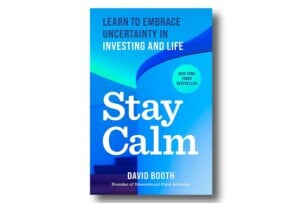
David Booth’s Stay Calm lays out the latest, highly convincing case for sticking to indexing and doing less as an investor.

We’re looking at how Bitcoin and various other cryptocurrencies have fared in the second half of 2026.

Mining and metals companies reasserted their lead atop the leaderboard in a more muted third quarter.

There are still unique advantages to spousal RRSP accounts, even after the advent of pension splitting.