
Selling your home without a Realtor can save money—but is it worth it?
Thinking of selling your home without a Realtor? Here’s what DIY sellers need to know about commissions, legal risks, pricing, and listing costs.


Advertisement
Thinking of selling your home without a Realtor? Here’s what DIY sellers need to know about commissions, legal risks, pricing, and listing costs.
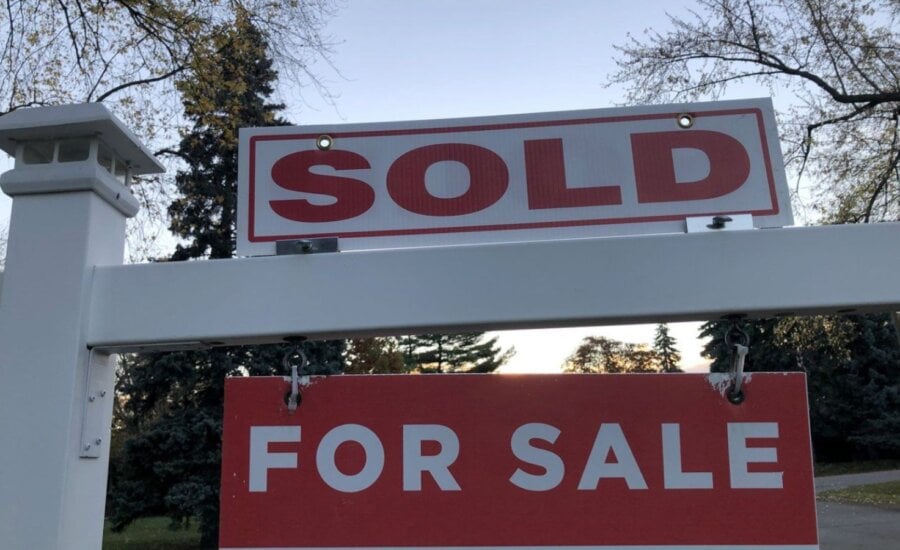
Getting rid of clutter, fixing paint chips and making your home look straight out of a lifestyle magazine is a rite of passage for homeowners planning to sell their property. But that to-do list gets a bit longer if you’re also planning to save money on commissions and sell the property without a Realtor.
Usually, a home seller pays an average of 3–5% commission on the final price of a house. That means a million-dollar home could result in about $50,000 in fees paid to Realtors.
When thinking of the potential cost savings, a DIY home sale may feel tempting amid rising mortgage renewal rates and falling home prices in many regions. But experts say it’s important to know what it takes to go it alone in the real estate market.
“There’s a ton of behind-the-scenes that takes place to prepare a home for the market,” said Colin Noble, an Uxbridge, Ont.-based real estate broker and founder of Noble Real Estate. Homeowners have to first start with getting the house ready. They may need professional help fixing smaller things around the house, repaint, declutter, deep-clean and pack up. Then, they may need to move much of their furniture into a storage locker while staging the house for visitors, Noble said.
Once that’s done, sellers have to think about taking photos of the house and getting the right exposure online to attract potential buyers. It’s vital to attract as many buyers as possible, which increases the chances of a sale, Noble said. Usually, he said, listing your property on a multiple listings services (MLS) platform for a small fee is the best way to get the most exposure.
The cost of listing a property on an MLS varies anywhere between $500 and $1,500, depending on the flat-fee charged by the home-listing company or platform the homeowner chooses. Some platforms charge a lower monthly fee for listings, instead of a flat rate.
Answer a few quick questions to get a personalized quote, whether you’re buying, renewing or refinancing.
But the real work begins once the listing is live and a DIY seller essentially fills the shoes of a Realtor. Homeowners should be ready to field calls and host visits from potential buyers, said Rob Reay, the owner of home-listing website For Sale By Owner. “Sometimes, your buyer only has half an hour to make a decision,” he said. “When they drove by your house, they saw your sign and they want to look at your place real quick because they have to pull the trigger on the other place.”
Reay said people need to be accessible “because that actually really helps your success.” The owner also needs to be professional when hosting visitors. “You are welcoming those people at the door and you’re staying there for the showing and you are conducting the showing,” Reay said.
Noble said the biggest misconception among independent sellers is that they won’t be paying any commission. “What they don’t realize is, you’re still likely going to be paying the buyer’s agent a commission,” he said. The chances a buyer would show up at your door without a Realtor are quite slim, he added. That means the homeowner would still have to pay 2.5%, for instance, in commissions to the buyer’s agent if the rate was set at 5%.
Pricing a property accurately as an independent seller can also be a challenge. Sometimes, a homeowner’s bias gets in the way of pricing the house, Noble said. “If you’re not in tune with the market or have the data you need to make those decisions, I think it can be a strong pitfall.” It’s important to let the market dictate the fair value of the home to be able to attract the right buyer, he said.
Then comes the delicate part of understanding any legal ramifications of selling your property or knowing if you understood the offer, which Reay said must be handled by a real estate lawyer. “Use a lawyer for everything you’re doing, whether you’re buying or selling,” Reay said.
Edward Carmichael, managing lawyer at real estate law firm OwnRight, said people need to be “extremely careful” when selling or buying without a Realtor. “When people don’t have a Realtor, I find it’s often the case that they don’t know what they don’t know,” he said. But there can be implications for things you may not know, Carmichael said. For example, what if there are tenants at the property? What if the mortgage financing falls through?
Carmichael said people who don’t use a Realtor should bring in a lawyer as early as possible to guide them through the process. In most provinces, it’s required by law to hire a real estate lawyer to perform the transaction. “A lawyer can step in and fill some gaps,” he said, and help understand what the clauses in an agreement mean. “But we’re not giving clients financial or investment advice and we don’t really have the same understanding of market value that a Realtor does.”
Share this article Share on Facebook Share on Twitter Share on Linkedin Share on Reddit Share on Email


The best rewards credit cards in Canada include the Rogers Red World Elite Mastercard, Scotiabank Gold Amex, and TD...

A new report shows how tipping culture is changing in Canada, with hospitality workers reporting a major drop in...

Who stays in the home? What are the divorce-related rules about mortgages in Canada? A mortgage expert answers questions.

Unless the government takes action, the foreign buyers ban in Canada will expire this coming January 2027. It began...

From dividing rent and bills to tracking shared expenses, here’s how to set expectations with roommates and keep money...

Credit Canada found that 68% of Canadians don’t know how much of their budget goes toward housing. Those who...

With home ownership increasingly out of reach for younger Canadians, some parents are helping their kids buy in by...

Yes, you can execute this combination of mortgage repayment and investing using ETFs. Your options depend on risk and...

Some expenditures stand in for the work required to actually reach our goals. Think of those before you swipe...

Ontario has new rental rules around eviction, late payments, and more. The rules kicked in on Sept. 21.
If the Canadian Press moto is ‘unbiased source’….how does that align with a one sided article with the opinion of a Real Estate broker? Shouldn’t you have also included the opinion of one of the many owners who have sold properties without agents?
well this still looked to be more biased and promoted via real estate brokers. There are other lower price options like discount brokers(1%,2%) and some new startups that would take care of listing, legal services and provide complete support of selling for some fixed fees of $1000-$2000.
Very biased article. I would agree the agents can add value in the sale of a home and would happily pay for what value is worth. But $50K on $1M home is ridiculous. How much do you pay the lawyer when selling, and they went to school for 8 years? The system is rigged. This is why there is class action lawsuit in the US and Canada, so hopefully we get in line with how it is done in Europe. Seller should NOT pay the buying agents commission. Once that ridiculous part of the contract is broken this can be made fair for homeowners. Then each buyer or seller pays a flat fee, if they want to, for a service received…
How about ways to save on legal fees which are nuts esp for simple buy or sell of land only, no mortgage, no conditions sales? Some more examples of lower fee brokerages would be useful
Yes, the article is clearly biased and favouring the real estate. Not surprising though.
We sold our condo in Cambridge, ON through one of those companies that were popular at the time. This was 2010. I forget the name and the company no longer exists. But the long and the short of it is, for us, it was dead easy. Yes, you have to be home and organize your own “open house”, but when there are people that have questions, who better to answer them than the owner? We got a handful of realtors with promises of interested parties and offers, if only we’d sign on with them. The nicest was a real estate agent that came and offered his card saying that if by chance we had a hard time selling or changed our mind to give him a call, to the worst agent that came clearly livid, saying we were treading on his territory, as he had a similar unit for sale for about a year. We were fully planning on needing a year to sell, but only needed three weeks, which we didn’t expect, and we weren’t prepared. But it all worked out. You get the same paperwork you see from a realtor, which you both sign, and of which one copy goes to the buyer. Then you need to make sure you both have a lawyer, and the rest is like it goes with a realtor. These people really don’t do anything you can’t do yourself, and the rest is dealt with by the lawyers. No problem. Nor are you talked in lowering your price if it doesn’t sell in the first week. Because the only thing the realtor is interested in is selling and pocketing his commision