
Are currency-hedged ETFs a good idea?
With the Canadian dollar weakening, investors may be considering currency-hedged ETFs. But whether hedging makes sense depends on a variety of factors.


Advertisement
With the Canadian dollar weakening, investors may be considering currency-hedged ETFs. But whether hedging makes sense depends on a variety of factors.
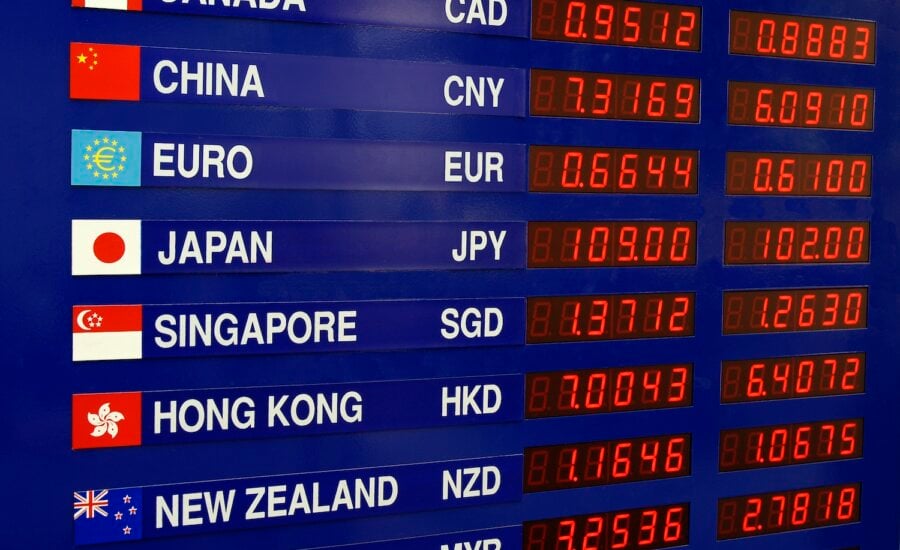
Year to date, I’ve watched the Canadian dollar fall as low as roughly US$0.70 in mid-June. It has recovered somewhat as of August, but over the past year, there has still been weakness in the loonie. Part of that can be attributed to the tariff threats coming from the U.S. against Canada, which have created uncertainty around trade and the Canadian economy. But the Canadian dollar’s weakness is not necessarily a reflection of deteriorating domestic fundamentals.
Part of the move has also been driven by strength in the U.S. dollar. The greenback has historically benefited from flight-to-safety demand during periods of geopolitical stress, while the higher-for-longer U.S. interest rate environment has also helped support the currency relative to its peers.
I bring this up because many Canadian investors own exchange-traded funds (ETFs) with substantial U.S. exposure. When you buy one of these ETFs without a currency hedge, your return is determined by more than what happens to the underlying stocks. Fluctuations in the Canada-U.S. dollar exchange rate can either add to or subtract from your Canadian-dollar return.
For investors who don’t want that additional source of volatility, Canadian ETF providers frequently offer currency-hedged versions of their funds. These provide the same underlying market exposure while using derivatives designed to mitigate the impact of movements between the Canadian and U.S. dollars. In many cases they are available for the same management expense ratio (MER) as the unhedged funds they are based on.
The question is whether that hedge is actually worth having. As with many things in investing, “it depends.” Here’s what Canadian investors should weigh before choosing between hedged versus unhedged ETFs.
The easiest way to understand currency hedging is to compare two nearly identical S&P 500 ETFs listed on the Toronto Stock Exchange.
The Vanguard S&P 500 Index ETF (VFV) is the unhedged option, with a 0.09% MER. Although VFV trades in Canadian dollars, its underlying stocks are U.S. companies valued in U.S. dollars. That means Canadian investors remain exposed to movements between the two currencies.
If the U.S. dollar strengthens against the Canadian dollar, that provides a tailwind. The U.S.-dollar value of the underlying investments translates into more Canadian dollars. Conversely, a strengthening Canadian dollar reduces the Canadian-dollar value of those same U.S. assets, creating a headwind even if the underlying stocks themselves perform well.
Its counterpart is the Vanguard S&P 500 Index ETF (CAD-hedged) (VSP). It also charges a 0.09% MER and owns essentially the same equity exposure, but uses derivatives to mitigate movements between the Canadian and U.S. dollars. A strengthening U.S. dollar therefore provides little benefit, while a strengthening Canadian dollar should do considerably less damage.
There is technically a third option if you already have U.S. dollars: buying the Vanguard S&P 500 ETF (VOO) directly. This U.S-listed fund provides unhedged exposure at a lower 0.03% expense ratio. Holding VOO directly inside a registered retirement savings plan (RRSP) can also avoid the 15% U.S. withholding tax on dividends that applies to Canadian-listed ETFs holding U.S. stocks. The trade-off is that you need U.S. dollars, making your brokerage’s foreign exchange costs an important consideration.
Looking backward requires some caution because any comparison between hedged and unhedged ETFs is heavily influenced by what currencies happened to do during the period selected. Over the period from January 2017 through July 2026, for example, VFV comfortably beat VSP.
| Portfolio performance statistics | ||
| Metric | Vanguard S&P 500 Index ETF | Vanguard S&P 500 CAD hedged |
| Start balance | $10,000 | $10,000 |
| End balance | $39,613 | $33,669 |
| Annualized return (CAGR) | 15.45% | 13.51% |
| Standard deviation | 13.09% | 15.68% |
| Best year | 35.24% | 30.17% |
| Worst year | -12.59% | -19.25% |
| Maximum drawdown | -18.55% | -24.90% |
| Sharpe ratio | 1.02 | 0.76 |
| Sortino ratio | 1.69 | 1.16 |
Source: Portfolio Visualizer
That does not establish that unhedged ETFs are inherently superior. This period included consistent U.S. dollar strength, which benefited Canadian investors holding U.S. assets. There have been very different environments historically, including periods like 1953 to 1960 when the loonie traded above parity with the greenback in the US$1.02 to US$1.06 range.
Currency movements can also affect portfolio risk in less obvious yet positive ways. Over this longer comparison, VSP actually experienced higher volatility and a deeper maximum drawdown than VFV. One potential explanation is the safe-haven behaviour of the U.S. dollar.
During periods of severe market stress, investors have historically sought refuge in U.S.-dollar assets. For a Canadian investor holding an unhedged U.S. equity ETF, that currency appreciation has partially offset falling stock prices. A currency-hedged ETF largely removes that potential cushion.
Looking at today’s exchange rate makes hedging tempting. If you believe the Canadian dollar is unusually cheap and likely to recover, buying VSP instead of VFV effectively protects you from the potential drag that a strengthening loonie would impose on your U.S. investments.
The problem is that you have now introduced a currency forecast into your investment strategy. Foreign exchange rates respond to an enormous number of variables. Interest-rate differentials, inflation expectations, economic growth, commodity prices, trade balances, fiscal policy, central-bank decisions, geopolitical events, and investor risk appetite can all affect the CAD-USD exchange rate.
Moreover, currencies trade in one of the world’s most liquid financial markets, populated by banks, hedge funds, and quantitative trading firms incorporating these variables into their models in real time. Consistently forecasting the Canadian dollar’s direction better than those participants is a tall order. If you could reliably predict major currency movements, choosing between VFV and VSP would probably be one of the least interesting ways to monetize that ability.
There can also be costs associated with maintaining a currency hedge. Even when two ETFs display the same headline MER, rolling the derivative contracts used to hedge currency exposure can introduce friction. Hedging therefore does not guarantee that the fund will perfectly replicate the currency-neutral return of its underlying investments.
My personal preference for long-term equity investing is generally to remain unhedged. Over sufficiently long periods, I am less concerned about short-term currency movements, and I would rather avoid making an additional active bet on where the Canadian dollar goes next.
A shorter investment horizon can change that calculation. If you know you will need the money in Canadian dollars within several years, a large currency move immediately before withdrawal could materially affect your outcome. Hedging can reduce that particular source of uncertainty.
I also think currency hedging makes considerably more sense with international bonds. Bonds are generally held to provide income, stability and diversification rather than substantial capital appreciation. Adding potentially large foreign-exchange movements to an otherwise relatively low-volatility fixed-income allocation can undermine that purpose. For that reason, many global bond strategies such as the Vanguard Global Aggregate Bond Index ETF (CAD-hedged) (VGAB) hedge their foreign currency exposure back to Canadian dollars.
And if you genuinely cannot decide between hedged and unhedged exposure, there is nothing wrong with splitting the allocation 50-50. Periodically rebalancing between VFV and VSP gives you partial currency exposure without requiring you to make an all-or-nothing forecast about the loonie. The important part is not turning that allocation into another form of market timing.
Constantly switching between hedged and unhedged ETFs based on where you think the Canadian dollar is headed defeats much of the purpose of index investing. For long-term investors, choosing a reasonable currency policy and sticking with it is likely more useful than repeatedly trying to predict the next move in one of the world’s most heavily traded currency pairs.
Share this article Share on Facebook Share on Twitter Share on Linkedin Share on Reddit Share on Email

David Booth’s Stay Calm lays out the latest, highly convincing case for sticking to indexing and doing less as an investor.

We’re looking at how Bitcoin and various other cryptocurrencies have fared in the second half of 2026.

Credit Canada found that 68% of Canadians don’t know how much of their budget goes toward housing. Those who...

There are still unique advantages to spousal RRSP accounts, even after the advent of pension splitting.

Yes, you can execute this combination of mortgage repayment and investing using ETFs. Your options depend on risk and...

Some Canadians will receive a payment from Veterans Affairs Canada (VAC) on Monday, September 28, 2026. The governmental department...

Financial experts reveal the money mistakes they made in their 20s and the lessons they wish they had learned...

Some expenditures stand in for the work required to actually reach our goals. Think of those before you swipe...

When bond yields rise, the effects ripple through the rest of the economy, and Canadians should take note. ...

What retirement experts have to say now about surviving an untimely market crash.