
The Wealthy Barber retires
David Chilton is retiring at 65 after four decades in personal finance. He shares why he’s stepping back and what comes next.


Advertisement
David Chilton is retiring at 65 after four decades in personal finance. He shares why he’s stepping back and what comes next.
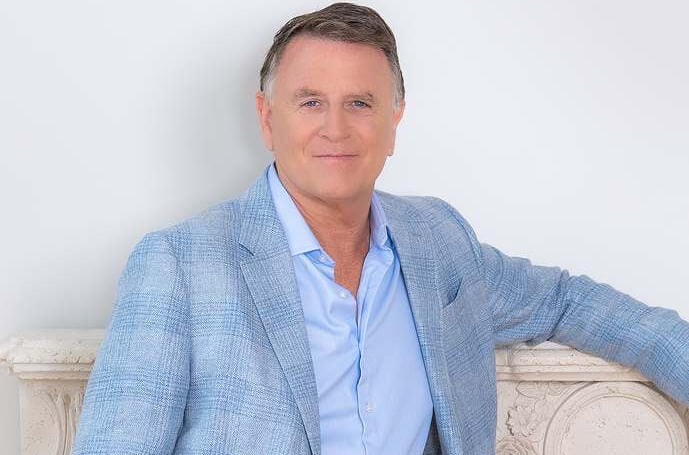
At the end of this year, The Wealthy Barber himself, David Chilton, is planning to retire. Ironically, he will do so at the traditional retirement age of 65, which he’ll reach late in October.
He revealed this on his popular The Wealthy Barber podcast on June 10, 2026, which you can find here. Later that month, Globe Advisor reporter Deanne Gage devoted a full column to his retirement (paywalled).
Chilton announced he plans to “shut down” at the end of 2026, including the now-two-year-old weekly podcast. But he will “continue to pump out our social media content” until early 2027. His main platforms are primarily visual media like YouTube, TikTok, Instagram, and Facebook, although he also has a presence on X, the former Twitter.
I interviewed Chilton for this Retired Money column early in August. He told me the podcast’s success was mainly generated by video shorts on Instagram and Facebook: “Some of these shorts will get half a million, 600,000 views. It’s crazy.”
While the podcast does well on YouTube, the audio version gets more traffic on Spotify and Apple Music. In typical self-deprecating fashion, Chilton quips it’s because “people don’t want to see me.” Nor has his team attempted to monetize it: “We’ve never taken advertising money.” Initially the podcast was every second week, but it soon moved to weekly (on Tuesdays). So far, more than 70 episodes have aired, with perhaps another 20 scheduled before it shuts down. His guests are a who’s who of Canadian financial experts, but he has also interviewed a few Americans, including Motley Fool alumnus and author Morgan Housel.
Chilton makes a point of mentioning key members of his team: his assistant Mo (Maureen Ross), who has been with him 30 years, and Aidan Stride, the driving force behind the podcast.
Chilton fans have one more chance to see him on the speaking platform: he’s embarking this fall on one last major national media tour for private companies about “key lessons I’ve learned throughout my career.” There will also be a number of meet-and-greet book signings at Indigo stores.
Seeing as the Big Chill—as a mutual acquaintance calls him—is almost a decade younger than me, I must admit my initial reaction to his imminent retirement was one of surprise. After all, Chilton has been perhaps Canada’s preeminent personal finance guru ever since he published his pioneering financial novel, The Wealthy Barber, back in 1989. That book, which weaved financial advice into a story format, spawned several imitators, not least my own, similarly named The Wealthy Boomer.
Chilton was 25 when he got the idea, wrote it up and published it at 27. The book launched Chilton on a successful four-decade career as an author and public speaker, with a stint in venture capital via the CBC’s Dragon’s Den. Between the various editions (U.S. and Canadian) and the subsequent The Wealthy Barber Returns, Chilton says total North American sales are between four million and five million.
Last year he released a completely rewritten Canadian edition of the original book, largely catering to the baby boomers’ children desperate to grab a spot on the first rung of the domestic housing ladder. That I can relate to as one of them is our daughter, now nearing 35. Project Flip, the audio version of the revised book, will continue indefinitely.
Clearly, Chilton is more than financially ready to retire but I didn’t press him on details. He’s divorced with two children and in a new relationship. We didn’t go into his own financial steps to implement his personal retirement. He’ll probably practise what he and his sources often preach and delay Canada Pension Plan (CPP) and Old Age Security (OAS) payments until 70.
He doesn’t need to convert his registered retirement savings plan (RRSP) into a registered retirement income fund (RRIF) yet but he’s got plenty of time before calculating the optimum time to do so. In his video with retired actuary Fred Vettese, there is a discussion about annuities: Vettese usually says annuities may make up to 10% or 20% of total retirement income, but Chilton is reluctant to get pinned down on all-purpose recommendations on them: “Annuities in some instances should be looked at. Canadians for some reason, and often their financial advisors, don’t embrace them at all.”
One quip in the new edition is typically funny and made at his own expense. On the back cover is a blurb by Bob Chilton, Dave’s dad, who is now in his 90s: “Over 30 years ago, Marjorie and I told David, ‘You won’t be able to just keep milking your one and only good idea forever.’ Turns out we were wrong.” As David told Gage, “I only had one good idea in my life. I’m lucky I had it when I was young.”
One reason I was surprised by his looming retirement was that I had the impression Chilton really enjoyed the career the book spawned, something he confirmed both in his podcast and in the interview with Gage. When she asked Chilton how long he had been thinking of retiring, he replied, “It’s not something I’ve been thinking about at all,” as “I had instinctively felt I’d always work because I enjoy my work immensely.”
Why the change of heart? He cites two major reasons, one good and one bad. One is his growing realization that the health of friends and family can’t be taken for granted indefinitely, and by extension his own. As he said on a podcast episode entitled Dave’s Retirement he simply wants to spend more time with his friends while they’re still around and healthy.
This calls to mind a blog Fritz Gilbert published in The Retirement Manifesto, which I republished on my own site. On Your 12 Good Years, fellow blogger Dan Haylett estimated 12 years is “how long the average healthy 60-year-old has before their mobility, energy, and independence start to significantly decline. Not before they die… before life gets noticeably harder.” So if you want to travel and indulge in various sports and activities, you’d best start doing so before the 60–72 window closes forever. (As I have observed before, I personally am already outside that window.)
With 65 looming, Chilton is wisely making the move closer to the beginning of that optimal window for getting the most out of retirement. Soon after this column is published, his daughter will make him a grandparent for the first time, which is the “good” reason he mentioned.
Chilton says the data “is really getting quite robust supporting the fact that it’s 72. Not everybody, but the vast majority of people are going to start running into significant health issues.” That doesn’t mean they’re going to die then but he’s seeing health issues arise in many of his friends, several of whom are older than him. “That definitely played a role in my decision. I want to not only take advantage of the time myself, but I want to spend time with more of my friends and colleagues.”
So he’ll soon have more time to enjoy leisurely dinners with those friends or play golf with them, or both. He’s also “thinking of going back to tennis,” which he enjoyed in his youth. He may also jump on the pickleball bandwagon, now so popular with the older set and even younger folk.
So how does David Chilton label his own retirement? It seems he views his personal transition more as a traditional “full” retirement than the “semi-retirement” I and people like Rob Carrick—whose retirement from a full-time staff position at The Globe and Mail was the focus of this Retired Money column a year ago—categorize themselves as practising. However, Chilton clarifies that “at least I’m fully retiring from The Wealthy Barber and from personal finance… but I do have a couple other projects I want to pursue. So semi-retirement, I guess, when you view it from that perspective.”
In the Globe article, he talks about cutting back on most of his “public-facing” activities, including public speaking. But in his podcast he said he’ll likely limit speeches to no more than 10 per year. He will also stay involved in several charities he has supported over the years. And he may take another crack at writing a play, something he did at age 18, a decade before The Wealthy Barber was conceived.
From where I sit, that doesn’t seem a huge stretch, as the dialogue and humor he uses to such effect in his books and on the speaker’s circuit is not unlike a play format. He was involved in financial advice as early as 17, using humour to teach and write articles. His original title idea for the book that made him a household name was The Ultimate Guide to Losing Money but he changed it after watching the popular TV show Cheers, briefly believing The Wealthy Bartender might fly.
The new, completely rewritten edition turned out to be a huge undertaking, one that took longer to pull off than the original. He has new material on exchange-traded funds (which didn’t exist until 1990, a few years after he originally wrote the book). And he has added new content on the high cost of living and real estate. As he did originally, he first tested the concepts on his target market:
Canadians aged 20 to 45. Much of this includes extensive pre-writing research, especially on the Canadian housing market. This is reflected in the book’s explanation of first home savings accounts (FHSAs), TFSAs, and the Home Buyer’s Plan, and how would-be first-time home buyers should prioritize them.
Much of the new content is in Chapter 8, Home Sweet (Sometimes bittersweet) Home and Chapter 9, Saving Savvy. He’s clearly concerned that it’s financially prohibitive for many young Canadians to buy their first homes, especially for those not fortunate enough to tap their baby-boomer parents. “The bank of mom and dad has become a huge part of this. I joked in the book that you should choose your parents wisely: that’s now the most important commandment in personal finance over pay yourself first.”
Chilton’s kids are 35 and 37 “but when I was working on this they were three years younger. Look at housing prices relative to income… It’s not just housing prices. It’s property taxes, it’s insurance, it’s upkeep… all those things have risen that are greater than the pace of the consumer price index. So home ownership from every perspective has become so difficult.”
It’s especially tough for singles. “On one income, it’s just so challenging… How do you strike the right balance where you give people hope and you don’t want to sound defeated, and you also have to take into account that if they’re going to focus exclusively on building a down payment, they’re not going to be building up retirement funds, et cetera, and they’re foregoing some years of compounding?”
While the new edition still emphasizes the “pay yourself first” and compounding basics, “the most interesting thing from my selfish perspective about the book is that chapter 9 on Savings Savvy is what we’re getting the most feedback on.”
Once he finishes the autumn push, what does Chilton’s more leisurely 2027 look like? It won’t include as much travel as most early retirees hope to experience. His public-facing career had him on the road as many as 100 days a year, so he plans to stay closer to home, which is a modest house outside Waterloo, Ont.
“I’ll certainly travel, but not near as much as a lot of my friends do… I spent literally thousands of days on the road in my career. In hotels… going to the airport. I’m ready to go the other route… I really like my life here in Ontario. I’ve got a grandchild on the way, as you know, and I’ve got my dog (Jasper). And I’ve got a lot of friends I enjoy. I enjoy my hobbies, so I don’t want to be away too much.”
Looking back, Chilton says his charity work has been one of the highlights of his career: being a master of ceremonies “at galas and helping on all of those things… I met so many great people and have a lot of friendships from that. There are some charities like the St. Joseph Hospice, for example, in Sarnia, where you’re involved not just by doing the speaking, but in a lot of ways,” such as fundraising. “I’ve enjoyed all that and I’ll probably get more involved.
“What I don’t want to do, though, is get involved where it has a specific schedule, because I want to have a little bit more freedom of flexibility.” Throughout his speaking career, he says, “I’ve always had to be in certain places at certain times. So now in retirement I’d rather have a lot more freedom.”
He adds that while it didn’t play a role in his decision, it’s a nice bonus to be “going out when things are going so well. “The podcast is booming and the book is still number one (on the Globe and Mail and Toronto Star bestseller lists). You kind of would rather leave when it’s like that than leave when, you know, nothing’s going well.”
Share this article Share on Facebook Share on Twitter Share on Linkedin Share on Reddit Share on Email


We’re looking at how Bitcoin and various other cryptocurrencies have fared in the second half of 2026.

Credit Canada found that 68% of Canadians don’t know how much of their budget goes toward housing. Those who...

There are still unique advantages to spousal RRSP accounts, even after the advent of pension splitting.

Yes, you can execute this combination of mortgage repayment and investing using ETFs. Your options depend on risk and...

Some Canadians will receive a payment from Veterans Affairs Canada (VAC) on Monday, September 28, 2026. The governmental department...

Financial experts reveal the money mistakes they made in their 20s and the lessons they wish they had learned...

Some expenditures stand in for the work required to actually reach our goals. Think of those before you swipe...

When bond yields rise, the effects ripple through the rest of the economy, and Canadians should take note. ...

What retirement experts have to say now about surviving an untimely market crash.

Should you buy or rent? Our guide breaks down the cost of homeownership vs. renting.
What can I get for my 30 year old daughter to be a substitute for The Wealthy Barber and an up to date Book please.
The only people who are happy about this news are my young adult children who are *very* tired of me forwarding Wealthy Barber Instagram posts to them! I can only hope they read them, as I know the original Wealthy Barber book was hugely helpful to my own approach to my finances. Well done, David Chilton – I wish you the best in your retirement!