
Gen Z’s analog obsession isn’t really about nostalgia
The analog economy is booming, but Gen Z isn't chasing nostalgia. Here's why younger consumers are paying more for analog experiences.


Advertisement
The analog economy is booming, but Gen Z isn't chasing nostalgia. Here's why younger consumers are paying more for analog experiences.
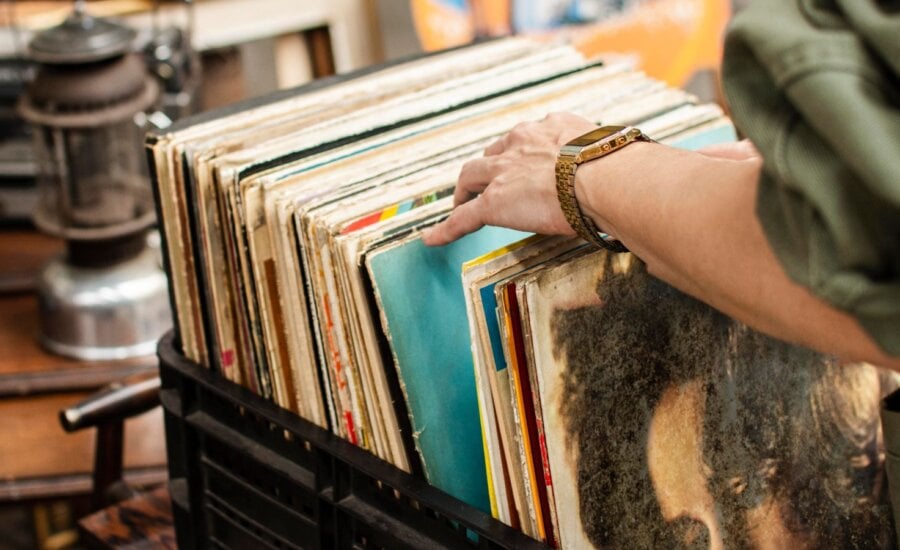
Vinyl records are spinning again. Film and digital point-and-shoot cameras are back in fashion. Paper planners, fountain pens, and watercolour kits are finding new homes with consumers who grew up with smartphones as an extension of their arm.
The trend has become so widespread that it’s earned its own name: the “analog economy.” And it’s not just hype. In Canada, sales of vinyl and other physical music formats climbed 34.5% between 2021 and 2023, reaching nearly $85 million, even as CD and digital download sales continued to decline.
While it’s easy to mistake the movement for nostalgia, that explanation falls apart when you consider who’s driving much of the demand. Gen Z never experienced the pre-digital world they’re supposedly nostalgic for.
So what’s really at play with the analog economy? According to values expert David Allison, founder of the Valuegraphics Project, the answer has less to do with technology and more to do with human psychology.
“We only make any decisions about anything because it gives us more of what matters most to us,” Allison says. “And what matters most is what our values are.” That subtle distinction reframes the entire conversation.
Get up to 2.75% interest on your savings without any fees.

Lock in your deposit and earn a guaranteed interest rate of 3.80%.

Open a High Interest Savings Account right now and earn 4.60% interest for 5 months. Only on eligible deposits up to $100,000.
MoneySense is an award-winning magazine, helping Canadians navigate money matters since 1999. Our editorial team of trained journalists works closely with leading personal finance experts in Canada. To help you find the best financial products, we compare the offerings from over 12 major institutions, including banks, credit unions and card issuers. Learn more about our advertising and trusted partners.
Rather than viewing vinyl records or paper notebooks as relics from another era, Allison sees them as tools people use to satisfy more deeply held values. For one person, that might be creativity. For another, self-expression. Others may be seeking a stronger sense of community, belonging or even security.
His own preference for pen and paper illustrates the point. “There’s something secure about knowing that the notes that I’m taking are in this pad with my pen,” he says. “It’s in the book that I wrote in with my pen.”
That feeling of tangible permanence offers something digital tools sometimes can’t: confidence that your thoughts won’t disappear into another forgotten app or buried Cloud folder.
Ironically, Allison doesn’t believe this movement represents a rejection of technology. Instead, he argues that technology itself is introducing younger consumers to analog alternatives.
“The only reason Gen Z is aware of this stuff is because the technology is showing it to us,” he says. Social media exposes users to vinyl collectors, film photographers, journaling communities, and digital detox retreats. Once those options start appearing in your feed, people naturally gravitate toward the ones that align with what matters most to them.
That also helps explain why cash-strapped young adults are willing to spend meaningful amounts of money on products that often cost more than their digital counterparts.
From a purely practical standpoint, a free notes app should outperform a $60 planner. Streaming services offer millions of songs for the price of a monthly subscription, while vinyl records require expensive equipment and often cost $40 or more per single album (not to mention the care and maintenance they require).
But purchasing decisions are not always rational. Drawing on years of global research, Allison says consumers consistently demonstrate a willingness to pay roughly 12% to 15% more for products that align with their values. The premium isn’t necessarily for the product itself, but for what the product represents to the consumer.
In other words, if a notebook makes someone feel more creative, organized, or original, or if a film camera helps them slow down and become more intentional with the photos they take, the purchase delivers emotional value that extends beyond its function.
Brands listen up. This is an important lesson for businesses hoping to capitalize on the analog economy.
Manufacturers of records, stationery, cameras, and office supplies have all reported renewed interest in products that many once assumed were headed for obsolescence. But Allison cautions against interpreting this as simply another “Gen Z trend.” His research suggests people within Gen Z share surprisingly little in common when it comes to the values that drive their decisions. “Marketing to Gen Z is a fool’s game,” he says.
Instead of targeting demographics, he argues that businesses should focus on the motivations that cut across generations. A brand built around creativity, craftsmanship, or self-expression can resonate with consumers in their 20s just as easily as those in their 60s.
That’s a useful reminder as marketers race to package analog products in nostalgic branding. The real opportunity may not be recreating the past, but helping consumers satisfy timeless human needs.
It also raises a bigger question about where technology is headed. After two decades of embracing every new app, platform, and connected device, many consumers appear to be searching for balance rather than complete digital disconnection. Analog products aren’t replacing smartphones, they’re complementing them.
Allison sees the shift as less of a backlash than a natural correction. He compares it to the early days of the internet, when businesses raced to launch websites, and to today’s explosion of AI. New technologies, he says, are often accompanied by a period of intense hype before people eventually settle into more balanced, practical ways of using them. The rise of the analog economy, then, isn’t a rejection of the digital world so much as a sign that we’re finding firmer ground after decades of digital overload. “I think we’re just kind of settling,” he says. “We’re finding some firm ground to stand on instead of all that froth and hype.”
For consumers, that may mean spending money more intentionally on products that foster focus, creativity or connection.
For businesses, it suggests that convenience alone is no longer enough. Consumers increasingly want purchases that reflect who they are and what they value.
The analog economy, then, isn’t really about records, notebooks, or film cameras. It’s about the growing willingness to invest in experiences—and objects—that help people feel a little more human in an increasingly digital world.
Share this article Share on Facebook Share on Twitter Share on Linkedin Share on Reddit Share on Email

David Booth’s Stay Calm lays out the latest, highly convincing case for sticking to indexing and doing less as an investor.

We’re looking at how Bitcoin and various other cryptocurrencies have fared in the second half of 2026.

Credit Canada found that 68% of Canadians don’t know how much of their budget goes toward housing. Those who...

There are still unique advantages to spousal RRSP accounts, even after the advent of pension splitting.

Yes, you can execute this combination of mortgage repayment and investing using ETFs. Your options depend on risk and...

Some Canadians will receive a payment from Veterans Affairs Canada (VAC) on Monday, September 28, 2026. The governmental department...

Financial experts reveal the money mistakes they made in their 20s and the lessons they wish they had learned...

Some expenditures stand in for the work required to actually reach our goals. Think of those before you swipe...

When bond yields rise, the effects ripple through the rest of the economy, and Canadians should take note. ...

What retirement experts have to say now about surviving an untimely market crash.