How to buy ETFs

Sponsored By
Fidelity Investments Canada ULC
Wondering how to buy ETFs? Some learn of an investment from a friend, influencer, or online article without exploring alternatives, just like with stocks.


Advertisement
Sponsored By
Fidelity Investments Canada ULC
Wondering how to buy ETFs? Some learn of an investment from a friend, influencer, or online article without exploring alternatives, just like with stocks.
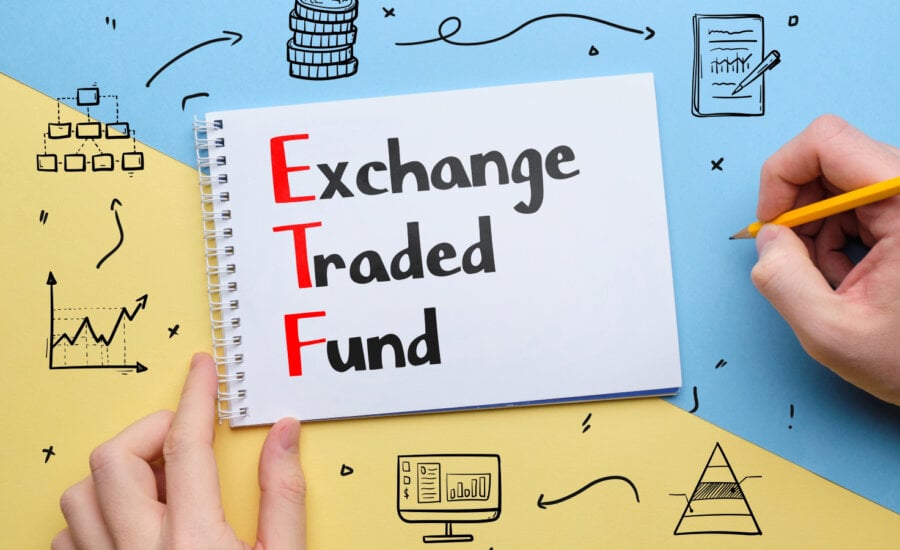
Some people may start investing in ETFs the same way they start buying stocks: they learn of an investment from a friend or an influencer or in an article they read, and then buy it without necessarily exploring the alternatives.
Fortunately, ETFs, like stocks, are supremely liquid. If you don’t make the best selection at first, you can sell your holdings and replace them with more suitable ones in a matter of minutes.
When it comes to core portfolio holdings—the basic building blocks of a portfolio, such as Canadian, U.S. and international stocks, and Canadian bonds—there are plenty of ETFs to choose from. You can also opt for an asset allocation ETF that combines them all in one fund.
These all-in-one ETFs can use different approaches, from passive index investing to active management, such as the approach used by Fidelity’s actively managed all-in-one ETFs.
With so many similar options from different fund companies, and often several from the same provider, how do you decide which ETFs to buy for a DIY investment portfolio?
Before you begin comparison shopping, you should have an investment plan. It will outline the purpose of the portfolio. What is it meant to fund: your retirement, your kids’ education, a home purchase, or life’s surprises?
How long should you invest in an ETF? Start by considering the time frame between first contributing to the portfolio and when you expect to draw from it.
If it is more than five years, you can consider more volatile but potentially rewarding underlying investments such as stocks.
Also consider your own risk tolerance. Would you be comfortable with your savings losing 20% of their value in a year, knowing that you don’t need the money for a decade or more and it will almost certainly recover?
The classic balanced portfolio for long-term investors was divided into 60% equities and 40% fixed income (the equity portion would be further divided into regions: U.S., Canada, international to maximize the risk-reducing effect of diversification).
A more conservative investor or one on a short timeline might increase the fixed income component; a more aggressive one with plenty of time could amp up the equities. Increasingly, investors are adding non-traditional assets such as commodities and cryptocurrency.
Your asset allocation can have a major impact on your portfolio’s risk and long-term returns, which is why it’s worth settling on an appropriate mix before comparing individual ETFs.
Further, DIY investing does not mean doing it in a vacuum. Ask a fee-for-service advisor or someone you know who’s knowledgeable about investing for a second opinion of your plan.
Once you’ve determined the asset exposures you are seeking, you can compare the ETF options within those categories. Here are the most important considerations:
Most of the fund characteristics listed above will be described in the ETF prospectus and fact sheet on the fund company website, or you can consult the information available from your brokerage, from media outlets or from third-party sites such as Morningstar.ca.
With so many ETFs available, how can investors simplify the decision-making process? One way is to choose an all-in-one ETF that holds a diversified portfolio of asset types in a single investment.
Often called asset allocation ETFs, these are offered by virtually all the leading fund companies in Canada. They come in a broad spectrum of risk/return profiles from conservative funds 80% invested in fixed income to aggressive, 100%-equity funds.
Some ETFs use a passive, index-based strategy, while others are actively managed. Fidelity, for example, offers actively managed all-in-one ETFs that combine multiple asset classes in a single fund. With an actively managed ETF, the portfolio manager has more discretion over which securities to hold and how the portfolio is positioned than with a traditional index-tracking strategy.
What should you look for in an actively managed ETF? In addition to its asset mix and risk profile, consider how the manager selects investments, the strategy’s track record, and how much you’re paying for the management.
You can use the same criteria listed above to evaluate all-in-one ETFs. Once you’ve settled on one, there’s little more you have to do other than contribute to it and buy more units; the fund manager will periodically rebalance the fund to keep it aligned with its long-term allocations. All it means is you have fewer decisions to make!
To find out more about Fidelity All-in-One ETFs, visit fidelity.ca.
The statements contained herein are based on information believed to be reliable and are provided for information purposes only. Where such information is based in whole or in part on information provided by third parties, we cannot guarantee that it is accurate, complete or current at all times. It does not provide investment, tax or legal advice, and is not an offer or solicitation to buy. Graphs and charts are used for illustrative purposes only and do not reflect future values or returns on investment of any fund or portfolio. Particular investment strategies should be evaluated according to an investor’s investment objectives and tolerance for risk. Fidelity Investments Canada ULC and its affiliates and related entities are not liable for any errors or omissions in the information or for any loss or damage suffered.
Portions © 2026 Fidelity Investments Canada ULC. All rights reserved. Fidelity Investments is a registered trademark of Fidelity Investments Canada ULC.
Share this article Share on Facebook Share on Twitter Share on Linkedin Share on Reddit Share on Email


Budget 2026 is expected to support the Liberal government's push to reduce Canada's reliance on the U.S. by building...

Multiple Canadian banks are blocking third-party AI agents from online banking due to security concerns. Find out the latest...

Rising fuel costs weigh on Air Canada's outlook, while higher copper and zinc prices lift Teck's profits. Here's what...

Read what the stock market updates of today are: The S&P/TSX composite index was up 30.84 points at 36,295.93.

John McKenzie says reducing regulatory and cost barriers could help more companies go public and strengthen Canada's public markets.

Since the 2022 bond bloodbath, investors have questioned bond ETFs. Learn how stock-bond correlations, diversification benefits and alternative ETF...

This Bank of Canada interest rate announcement comes with a soft warning: more increases could follow.
Read what the stock market updates of today are for Canada and the U.S.