Unpacking the proposed Canada Groceries and Essentials Benefit
Canada’s proposed Groceries and Essentials Benefit could boost GST credits for millions. Here’s who qualifies, how much you could get, and when.


Advertisement
Canada’s proposed Groceries and Essentials Benefit could boost GST credits for millions. Here’s who qualifies, how much you could get, and when.
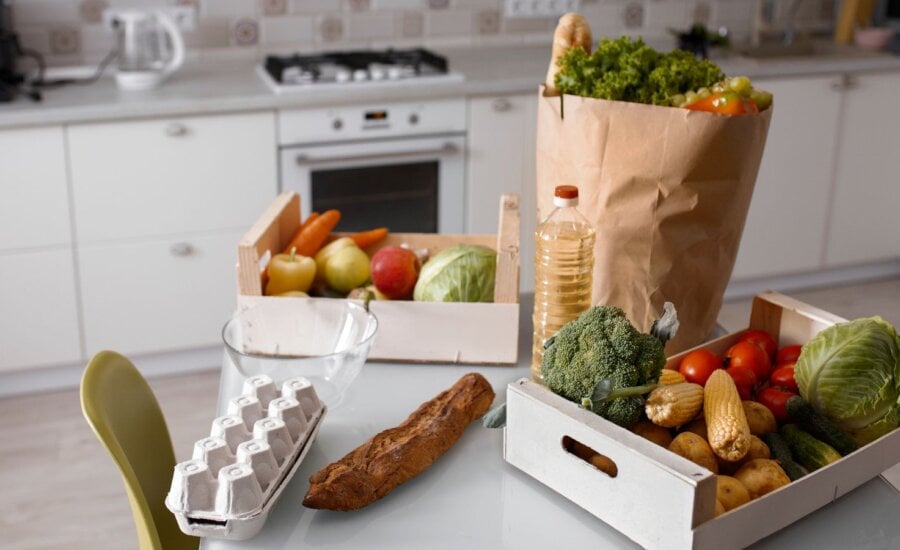
On January 26, 2026, Prime Minister Mark Carney announced the Canada Groceries and Essentials Benefit, a package aimed at addressing affordability issues, particularly for low- and modest-income Canadians. The plan must pass the House before it can become law—essential before making a change to the tax code. We’re unpacking what this could mean for everyday Canadians.
Beginning in the spring of 2026 and lasting for six years, this benefit will provide an additional $11.7 billion in support to low- and medium-income Canadians. According to official reports, this credit will “build on the existing Goods and Services Tax (GST) credit”, and you’ll receive it the same way, as quarterly payments.
The first disbursement, coming by June 2026, will be a one-time top-up amount. After that, you’ll receive more regular benefits that will increase over time as they’re indexed to inflation.
The government estimates that the benefit will reach more than 12 million Canadians. Eligibility requirements will be “based on” existing GST credit criteria, meaning that to be eligible, you have to be:
Your income threshold depends on whether you’re single or partnered, and whether you have dependents. It also changes year over year. In 2024, the threshold for a single person with no dependents was $56,181; if you made less than that amount, you would receive the credit.
Eligibility is tied to income, so you must file a tax return (even if you have no income to report for the year). With that, you’ll receive your payment automatically.
The amount you receive will depend on your living arrangement, so single people with no children will receive a different amount than families of four, for example. Additionally, the benefit will come as a one-time payment, and then five years of regular payments.
One-time top-up payment. There will be a one-time payment, sent out by June 2026. Your amount is equal to a 50% increase in the annual 2025-26 value of your GST credit. In other words, if your GST credit is $1,000, you’ll receive a one-time payment of an additional $500.
Regular increases for five years. The Canada Groceries and Essentials Benefit will increase by 25% for five years starting in July 2026. In an example offered by the government, “this means that a family of four will receive up to $1,890 this year, and about $1,400 a year for the next four years; and a single person will receive up to $950 this year, and about $700 a year for the next four years.” The exact amount for your household will depend on your living arrangement.
The Canada Groceries and Essential Benefit builds on the GST credit, meaning that there will not be a separate GST payment. However, it won’t affect your other existing benefits like the Canada Child Benefit, the Canada Disability Benefit, or the Guaranteed Income Supplement.
The Canada Groceries and Essentials Benefit is aimed specifically at low- and middle-income earners, but there are also proposals to bring down prices and build longer-term food security nationwide.
The Strategic Response Fund (SRF) is to support Canadian innovation, adaptation, and competition. As a part of this proposal:
Food producers will be able to fully write off any greenhouse buildings acquired on or after November 4, 2025, and that become available for use before 2030. This reduces costs for producers, helping increase domestic supply. It will also stimulate investment in food production over the medium-term.
The National Food Security Strategy is intended to boost domestic production and strengthen the Canadian economy. As a part of this work, there will be measures to introduce unit price labelling. There will be support for the work of the Competition Bureau, which monitors food supply chains and enforces competitive practices.
For more than 12 million Canadians, this is welcome relief and not a moment too soon. But there’s great news here for everyone. A National Food Security Strategy and funding for core groups—like producers and food banks—will go a long way towards a strong national food system.
Share this article Share on Facebook Share on Twitter Share on Linkedin Share on Reddit Share on Email


For those new to Canada, it's especially important to build a solid financial base to boost your chances of...

Review the 2026 CPP payment dates, how much you could receive, when to apply, and how the Canada Pension...

Find out the OTB payment dates for 2026, eligibility rules, and how the Ontario Trillium Benefit works for Ontario...

Find the 2026 CCB payment dates, maximum benefit amounts, income cutoffs, and eligibility rules for the Canada Child Benefit....
Ontario’s new pay transparency rules require salary ranges and AI disclosure in job postings, aiming to level the hiring...

Your RRSP contribution limit comes from unused deduction room plus 18% of last year’s income. Use our RRSP calculator...

Holiday job postings in Canada are up slightly this year, but competition remains strong as unemployment stays elevated, making...

Sue's tips for freelancers include paying off credit cards, saving for taxes in a separate account, and scrutinizing every...

Youth unemployment is rising, as employers increasingly turn to AI and other technologies to perform tasks.

Getting fired or laid off can be emotionally and financially draining. Experts share what to expect and what steps...