Drive gently and carry a loyalty card: ways to take the edge off high pump prices
Gas prices soar amid Middle East conflict, but Canadians can cut costs by driving efficiently, maintaining vehicles, comparison shopping, and using loyalty rewards.


Advertisement
Gas prices soar amid Middle East conflict, but Canadians can cut costs by driving efficiently, maintaining vehicles, comparison shopping, and using loyalty rewards.
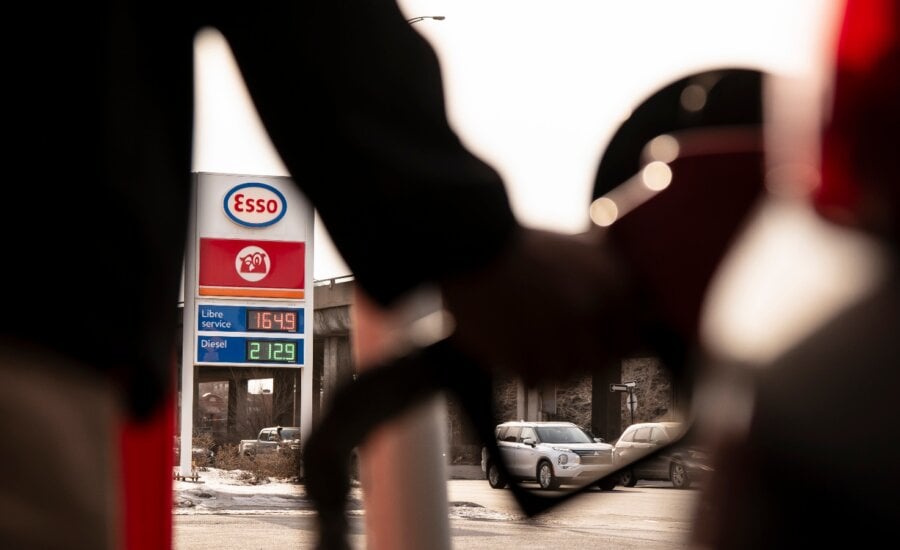
It’s easy to feel helpless watching that number outside your local gas station move ever higher. The United States and Israel launched their war with Iran almost three weeks ago and the conflict has since spilled over into several other countries in the region, choked off a strategically vital oil tanker route, and sent crude prices soaring, bringing the cost of fuel along for the ride.
Global crude prices edged close to US$120 per barrel earlier this month and have since fallen back under US$100, which is around 45% higher than before the war. The Canadian average for a litre of gasoline on Wednesday afternoon was about $1.69, according to price-tracking website Gasbuddy.com, almost 40 cents higher than last month’s average.
The upward price spiral may be due to geopolitical upheaval beyond almost anyone’s control, but there are a number of ways motorists can take some of the edge off.
Kristine D’Arbelles, managing director for public affairs at the Canadian Automobile Association, says the way you drive can influence how quickly your vehicle guzzles up fuel. “You’re using most of your fuel when you’re accelerating your vehicle,” she says.
Slamming on the gas with a “jackrabbit start” will be less fuel efficient than speeding up more gradually. CAA recommends taking five seconds to accelerate up to 20 kilometres per hour from a stop. Ditto for braking; a light touch to coast through traffic will burn less fuel than hard stops and starts. “The way that CAA tries to encourage folks to drive also happens to be a safer way to drive,” says D’Arbelles.
For highway driving, the faster you go, the more fuel you’re going to use. D’Arbelles recommends using cruise control in good conditions. Open windows on a warm day are fine for city driving, but on the highway, she recommends rolling them up to reduce drag.

SimplyCash Card from American Express

CIBC Dividend Visa Infinite Card

Idling is also a big fuel gulping culprit. D’Arbelles says every 20 seconds a car is parked while running wastes a litre of gas. Sometimes it can’t be helped, like waiting in the school pickup line in frigid or scorching weather. But otherwise, D’Arbelles says “one of our rules is that if you are going to be stopped for 60 seconds or more, just turn off the vehicle.”
Under-inflated tires can increase fuel consumption by 4%. CAA says a poorly maintained vehicle can jack up fuel consumption by up to 25%. If accessories like rooftop ski racks aren’t needed, they can also be taken off to help the vehicle move more efficiently.
Prices are going to vary station to station depending on when and from which supplier retailers purchase wholesale fuel, says Patrick De Haan, head of petroleum analysis at Gasbuddy.com. Gasbuddy’s website and app enable users to comparison shop, based on price reports crowdsourced across Canada and the U.S.
Some people swear by filling up on a certain day of the week or at a specific time of day. That might have been a good bet in normal times, De Haan says, but that’s far from the reality these days. “You’re never going to be able to time the market perfectly, whether it’s the stock market or filling your tank,” he says. “They all change in value in real time, depending on the situation. So the best thing is to empower yourself with knowledge and to know what is going on in the marketplace.”
De Haan says it’s also a myth that it’s worthwhile to fill up during cold weather—the idea being that the fuel is denser and you can get more of it for the price. Stations in Canada correct for temperature fluctuations to ensure every litre is measured accurately.
All of the major fuel retailers in Canada offer a loyalty program. No need to overthink it when deciding which one to choose, says Barry Choi, who writes about personal finance and travel on his Money We Have website. “Look at where you pump up gas the most and then see if they have a loyalty program,” he says. It could very well be a loyalty program you’re already enrolled in—through your credit card, for instance—has a partnership with a gas retailer. “But I wouldn’t drive ten blocks just to earn a certain amount of points,” he says.
All the programs have worthwhile perks, but Petro-Points’ new platinum status gives heavy fuel consumers the best bang for their buck, Choi says. Points earned filling up at Petro-Canada stations can be linked with rewards collected through RBC credit or debit cards and Canadian Tire’s Triangle program.
Earlier this year, Shell Canada announced it was joining the Scene+ loyalty program, which is owned by Scotiabank, Empire Co. Ltd., and Cineplex. The partnership is up and running in Alberta, with plans to expand to the rest of the country in May.
Fill-ups at Esso can get you PC Optimum points at Loblaw grocery stores or Shoppers Drug Mart.
It can be easy to “stack” savings by linking up gas station programs to a credit card or other rewards, says Choi. “There’s sometimes double dipping, triple dipping,” he says. “It can be very strategic.”
Share this article Share on Facebook Share on Twitter Share on Linkedin Share on Reddit Share on Email


Canadian companies face a turbulent quarter, with Algoma Steel losing big and Transat posting gains amid major corporate moves.
Global airlines, including Air Canada and WestJet, are raising fares and fuel surcharges as jet fuel prices soar following...

Q4 shows mixed results across sectors: Canadian Natural and Pet Valu post gains, while George Weston and Canada Packers...

Canada’s banking sector sees higher Q1 profits and strong financial performance in the latest earnings reports.
A pricing error could work in your favour. Discover how Canada’s Scanner Price Accuracy Code compensates shoppers—and its important...

From big profit jumps at Enbridge and Cenovus to strong holiday sales at Canadian Tire, see how major Canadian...

EQ Bank is still unknown to many Canadians, but is expanding with the PC Financial deal to grow its...

Manulife reports $1.5B in Q4 profit while Air Canada rebounds to $296M. See how Sun Life, Brookfield, and other...

From lottery winnings to gifts and inheritances, here’s what Canadians need to know about what income is (and isn't)...

Catch up on the past week’s biggest news for Canadian investors, with earnings results from Suncor, ATS, Brookfield, BCE,...