
What we lost when spending got easier
Friction at the point of sale used to give us pause to reconsider our purchases. Today's retail systems are so efficient we need to impose a time-out on ourselves.


Advertisement
Friction at the point of sale used to give us pause to reconsider our purchases. Today's retail systems are so efficient we need to impose a time-out on ourselves.
I was on the elliptical machine at the gym the other day when I wondered if I might want a degree in behavioural psychology.
Minutes earlier I had been writing to my MoneySense editor about my philosophy on personal finance writing—how I want readers to feel seen rather than shamed for the decisions they make. My mind wandered, the way it does mid-workout, toward my own career. An old friend from university had recently gone back to school for something similar and I thought about reaching out to her to get a better sense of what that experience was like.
Instead, I opened my GPT and typed in the question.
The answer arrived in seconds. No call, no waiting, no research. The thought itself was gone within the hour, one of those ideas that visits and leaves without much consequence. What stuck with me wasn’t the question, but the gap between wanting to know something and knowing it. A gap that had shrunk from days and possibly weeks to seconds without my noticing it happen.
And then I began to wonder how often that same gap shows up in how we engage with money.
As I thought about this shrinking gap, I realised that we now live in a world where I can order something while I am still deciding whether I need it. I have, on more than one occasion, ordered kitchen towels from that same elliptical machine. I have booked flights, hotels, concerts while I’m out running errands. I can and have ordered dinner before really considering what I was craving.
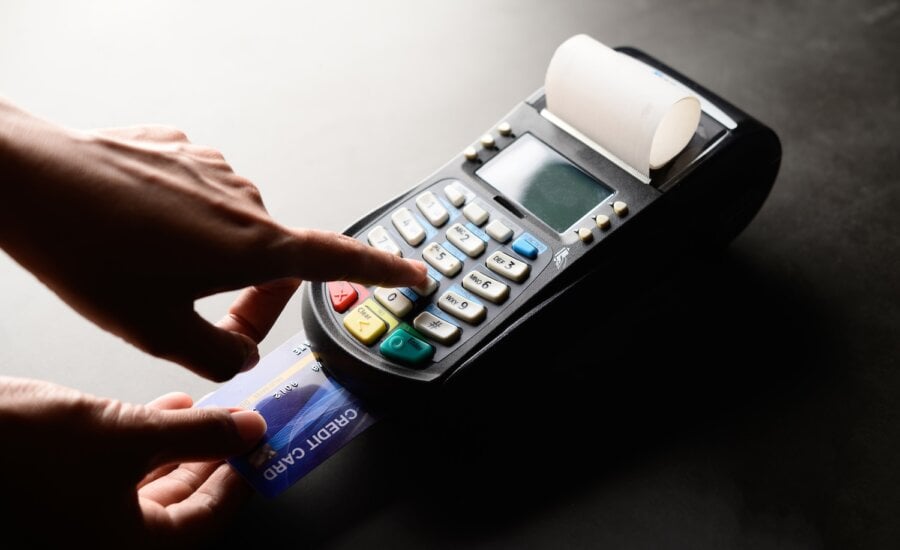
This isn’t just a feeling. Retailers have spent two decades engineering this gap out of existence, and they have the numbers to prove it worked. A Marketing Science Institute study that examined the rise of one-click checkout found that customers given access to one-click buying visited the retailer’s site 18.5% more often and expanded their purchases across product categories by 43.3%. The same study went further to find the actual mechanism behind it: shoppers using single-step, frictionless payment had measurably worse recall of what they’d previously spent than shoppers who went through a multi-step checkout, and that reduced recall was what drove the increase in impulse buying. The ease didn’t just make spending faster; it also made spending harder to remember.
Coming to this realization in many ways was an ”aha” moment for me. I had always assumed the danger of frictionless spending was the spending itself, but it turns out it is also the forgetting. Every purchase that skips the pause also seems to skip the part of my brain that would otherwise have filed it away as a decision I made, on purpose, for a reason.
In my early twenties, living in Dubai, I remember walking into a mall to buy a gaming console. I had never owned one but a new model had just launched and I wanted it, suddenly and immediately.
My then-fiancée, now my wife, suggested I wait a few days. If I still wanted it, I should go buy it.
I took her advice and, as it turned out, that desire didn’t stand the test of time. I liked the outcome of that suggestion enough to turn it into a rule. Anything that wasn’t a necessity got seven days. If I still wanted it after a week, I bought it.
Most things didn’t survive the week. The desire faded, or I forgot, or something else took its place. The rule wasn’t really about restraint; what it did was give me a way to find out which of my wants were real.
That rule held for years without much effort on my part, but it eventually died. And when I think hard, I can name the purchase that killed it.
We were headed on a trip of a lifetime and I decided I wanted an action camera. There was no urgency to the purchase. I could have given it more thought, compared a few models the way I would have in the past. Instead, I took advantage of the newly introduced next-day delivery and there it was.
I used it once and it has sat on a shelf ever since.
The footage from that vacation was fantastic, and I am glad I have those memories. But my phone would have captured those moments no differently. I used the purchase as an excuse for a kind of creativity I didn’t need a separate device for. A few weeks after the vacation, I had forgotten about the camera. That’s the part that bothers me, and now I understand why: the purchase was so frictionless that it barely registered as a decision at all. There was nothing to remember, because there had never really been a moment where I made a conscious choice.
The camera is the one purchase I still have physical evidence of. Most of the other frictionless purchases I’ve made since then have disappeared into the background, leaving nothing behind to remind me that I ever made them. The camera is different. It sits on a shelf, reminding me what happens when wanting something and buying it become the same moment.
Researchers who study what they call “positive friction” have found the same mechanism at work: waiting periods exist to force reflection before we commit to a decision, and design features like one-click checkout were built specifically to remove that reflection, because reflection is bad for conversion rates. My seven-day rule wasn’t a quirk. It was a crude version of a mechanism that existed almost everywhere by default, before companies spent years engineering it out.
Businesses have spent enormous sums removing friction from spending, and for good reason. Faster checkout, saved payment details, next-day delivery, one-tap booking—all of it makes life easier. I’m not romanticising a world where everything required a trip to the store or a few days’ wait.
But friction used to do something else too, almost as a side effect of being inconvenient. It filtered desire from impulse. The journey to the mall gave the purchase time to matter or stop mattering, like the seven-day rule. The inconvenience wasn’t the point—the pause was.
That pause is largely gone now, not because I got worse at managing my own impulses, but because the systems around me got very good at removing the space where that management used to happen. And that gap between wanting and having, which I first noticed as a passing curiosity on an elliptical machine, turns out to be the same gap that let a several hundred-dollar camera slip past me.
Financial advice generally assumes a moment exists in which you consciously decide to spend. A budget is built around that moment. Separate needs from wants. Think before a big purchase. All sound advice, and none of it accounts for what happens when the moment collapses into the thought itself, when wanting and having arrive together and there’s nothing left in between to be intentional about.
I’ve written before about the coffee I buy every single morning without an ounce of guilt, because it’s intentional. I know exactly why I’m buying it and what it gives me back. The camera never got the chance to pass or fail that same test. It simply arrived, the way most things do now, before I had finished deciding whether I wanted it.
The same researchers found something else worth mentioning. Shoppers who went through more payment steps didn’t just spend less. They also remembered more accurately what they’d already spent, which meant they made their next decision with better information. Friction, in other words, wasn’t just protecting people from one bad purchase, it was protecting their memory of every purchase that came before it.
That’s the piece I think we’ve genuinely lost. My seven-day rule worked because the world around me made me wait.
Now I must create that pause for myself.
What I have is a camera. It sits on the shelf, unused, and it still tells me something true every time I notice it: that the space between a thought and a transaction did more work than I gave it credit for, and that the cost of losing it was never really the money. It was knowing which of my wants were ever real.
I’d be curious what’s sitting on yours.
Share this article Share on Facebook Share on Twitter Share on Linkedin Share on Reddit Share on Email


Which ETFs should you invest in? Which ones best suit your risk tolerance? What about personal ethics? Check out...
Some Canadians will receive a payment from Veterans Affairs Canada (VAC) on Monday, September 28, 2026. The governmental department...

Ikea is leaning into low prices, used furniture, and cheaper meals as Canadians face higher living costs.
FAIR Canada says Canada should maintain restrictions on prediction markets unless broader access is shown to benefit investors and...
Financial experts reveal the money mistakes they made in their 20s and the lessons they wish they had learned...

We plan for the future based on what worked in the past. But what happens when the next generation...

Some expenditures stand in for the work required to actually reach our goals. Think of those before you swipe...

When bond yields rise, the effects ripple through the rest of the economy, and Canadians should take note. ...

What retirement experts have to say now about surviving an untimely market crash.
Eligible for CPP and OAS/GIS? Here’s how much money you can expect this week.