
Should you pay your tax instalment payments?
Tax instalments can be confusing. Learn how the CRA calculates quarterly payments, when you can adjust them, and how to avoid interest and penalties.


Advertisement
Tax instalments can be confusing. Learn how the CRA calculates quarterly payments, when you can adjust them, and how to avoid interest and penalties.
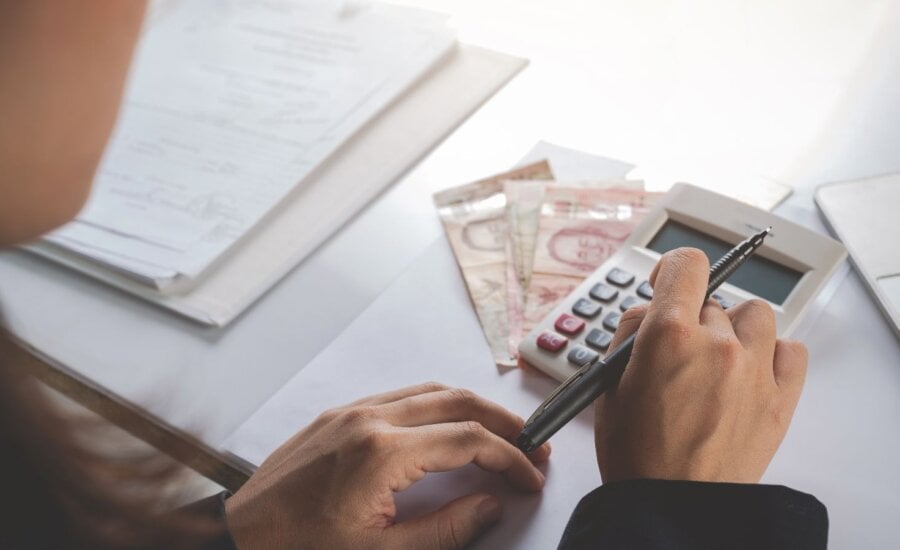
If you generally owe when you file your tax return, you are probably accustomed to paying quarterly income tax instalments. These are requests to pay some of your estimated tax for the current tax year in advance, even though it is not due until the following April.
Everywhere but Québec, the trigger is owing $3,000 or more tax in two consecutive years. In Québec, it is a lower $1,800 threshold because taxpayers in that province file tax returns with Revenu Québec in addition to the Canada Revenue Agency, and the tax threshold is based on net income tax payable for either of the two previous years.
Depending on the time of year, there are different considerations for whether to pay, play catch up, or skip a payment. After all, instalments are suggested payments, not balances owing, though there are interest and penalties at play, as well.
If you are considering a March 15 instalment payment, keep in mind that the CRA bases your March and June instalment reminders on the tax owing from two years earlier, because your previous year’s return may not yet have been filed and assessed.
So, your March 15, 2026 instalment amount would be based on your 2024 tax return.
If your tax owing was much less in 2025 or will be much less in 2026, you may be able to pay a lower amount or nothing at all.
Once you file your tax return, you will have a better sense of your tax owing for the previous year—and lots of time to catch up.
The CRA allows some flexibility as long as your total instalments roughly line up with your actual tax owing for the year.
Say the CRA asked you to pay $4,000 of tax for March 15 and another $4,000 for June 15, and you have paid nothing to date. If you only owe $10,000 of tax for the previous year, you might be able to pay $7,500 on June 15.
In effect, you would be averaging the required instalments to match your actual $10,000 tax bill: one payment late, one early, and one on time. A final payment of $2,500 on December 15 may then suffice for your instalment requirement of $10,000 in total payments.
Deadlines, tax tips and more
Your March and June instalment reminders come in February. If you are not sure whether you were required to pay instalments for the current year (or whether you already paid them), you should check your CRA Account. Otherwise, you may not notice until you get an August reminder for your September and December instalments.
The September and December instalment reminders are recalculated using your most recent filed return. So, while the March and June 2026 reminders rely on your 2024 return, the September and December amounts will use your 2025 return.
Even if the CRA does not request September and December instalments, you may still need to catch up on missed earlier payments to avoid interest. So, use it as an opportunity to check what you were asked to pay and what you did pay earlier in the year.
Your final instalment date of the year is a good opportunity to reassess. By December, you should have a sense of your income for the year. For taxpayers with volatile income from self-employment or non-registered capital gains, for example, it may be easier to estimate your final tally with 11 months behind you.
Tax estimates can be more difficult for investors who own mutual funds or pooled funds. These investments can distribute taxable capital gains even if the investor did not personally sell any units.
You can make payments toward your instalment account at any time. The instalment deadlines are fixed, but taxpayers can also make additional payments throughout the year.
However, if you pay late or underpay, you may be subject to interest and penalties.
If you find yourself early in the following year and behind on your instalments for the previous year, you can still make a payment to stop further interest from accruing. Just be careful your payment goes to the correct tax account at CRA. A 2027 payment may be applied to your 2027 instalment account instead of 2026.
The safest way to avoid interest is to pay the requested instalments to the CRA and Revenu Québec. As long as you do this, even if you still owe when you file, you can avoid interest or penalties.
Taxpayers with fluctuating income may choose to estimate lower instalments based on their current-year earnings. But if those estimates are too low, interest charges can apply.
Share this article Share on Facebook Share on Twitter Share on Linkedin Share on Reddit Share on Email


Some Canadians will receive a payment from Veterans Affairs Canada (VAC) on Monday, September 28, 2026. The governmental department...

Financial experts reveal the money mistakes they made in their 20s and the lessons they wish they had learned...

Some expenditures stand in for the work required to actually reach our goals. Think of those before you swipe...

When bond yields rise, the effects ripple through the rest of the economy, and Canadians should take note. ...

What retirement experts have to say now about surviving an untimely market crash.

Should you buy or rent? Our guide breaks down the cost of homeownership vs. renting.

Canadian-listed “.U” ETFs let investors put U.S. dollars to work without buying U.S.-domiciled funds, potentially offering advantages for tax...

Home sales in Canada are down but sale prices and listings are up find out what the latest numbers...

Run clubs, pickleball leagues, and hobby groups are changing how young professionals network. Here’s why making friends first can...

You may be surprised how much RRIF income increases your tax bill after age 71. Here are some ways...
If tax is due April 30 and paid in full, why does the government charge me penalties and interest? When I was working I always got a tax refund. The government only paid interest on the amount following April 30. Explain the double standard! Thanks.