How retirees should respond to the Iran crisis
In the likelihood of a protracted conflict, these experts think people in or close to retirement need to review their asset allocation.


Advertisement
In the likelihood of a protracted conflict, these experts think people in or close to retirement need to review their asset allocation.
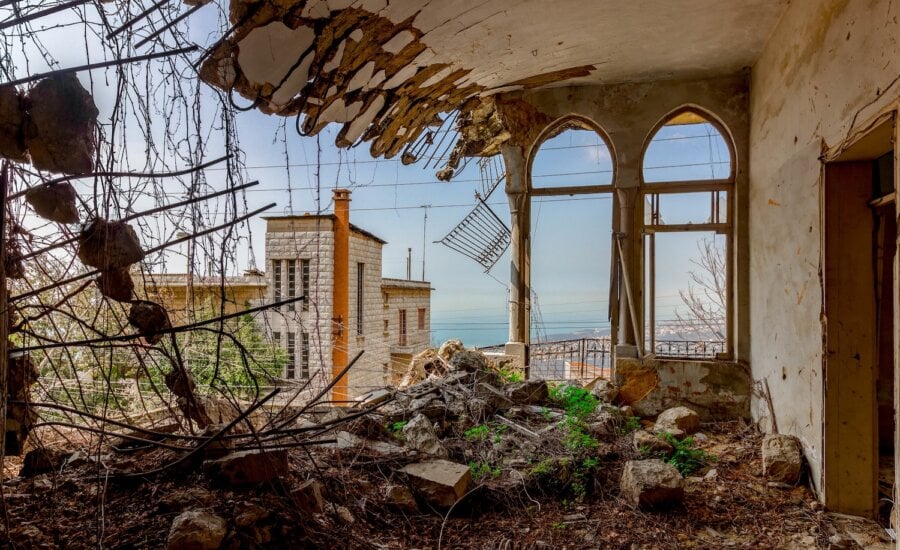
Cynics have rechristened America’s attack on Iran as Operation Epstein Fury, suggesting the main reason for Operation Epic Fury (as the Trump Administration originally called it) was to distract from the Epstein Files and the president’s one million mentions therein. Whether that cynicism is justified is beside the point for most investors, and especially retirees and those who hope to retire in the next few years. Experts consulted for this column believe the global conflict launched in late February will drag on far longer than the “few weeks” initially advertised. Look at Vietnam or Russia’s “special military operation” against Ukraine, now in its fifth year.
While the U.S. may yet attract some second-tier allies, thus far Trump seems to be isolated and forced to “go it alone,” perhaps a karmic response from the allies he spurned with his tariffs and global trade war.
For a comprehensive look at recommendations by 14 investment advisors and business owners in the U.S., see the recent blog on my site, coordinated by Featured.com on LinkedIn. In the more limited space available for this column, I have added Canadian input from four well-known domestic financial pros.
Typical of the Featured.com blog is this comment from an advisor who warned against making major asset allocation shifts because of geopolitical events like Iran: “Large structural shifts are rarely advisable for retirement investors because they can introduce timing risk,” said Dennis Shirshikov, head of growth and engineering, Growthlimit.com.
“A more disciplined approach is to review whether the portfolio already includes defensive characteristics such as income-producing assets, diversified sectors, and a stable allocation to fixed income. When those foundations are in place, geopolitical events tend to have less influence on long-term outcomes. Investors often benefit more from maintaining diversification and liquidity than from attempting to reposition aggressively during uncertain moments.”
Or as another source succinctly put it, “For most retirees, this is more of a rebalance-and-defend moment than a reason to overhaul the portfolio.” Lastly, investment banker Oliver Bogner of the Advisory Investment Bank describes his major defensive move as “a barbell: keep quality equity exposure, but pair it with explicit ‘shock absorbers’ that don’t pretend to predict the war.”
His exchange-traded fund (ETF) picks include “GLD [invested in gold bullion] as an insurance sleeve for energy/war risk and XLU [utilities] for the boring cash-flow tilt; I size them small enough that they help in stress but don’t hijack the whole portfolio.”
Moving on to a more Canadian perspective provided by local experts, former advisor and blogger Dale Roberts recently penned this excellent blog on the spectre of stagflation, which is an insidious combination of diminished growth coupled with rising inflation. Among his many suggestions, the most valuable may be his emphasis on maintaining an “all-weather portfolio” catering to all four possible economic quadrants: inflationary growth, disinflationary growth, stagflation, and deflation/recession.
Certified Financial Planner John de Goey, portfolio manager with Toronto-based Designed Securities, was increasingly bearish well before the Iran war. “I absolutely think the world has changed,” De Goey told me in an email exchange. “Not only has the rule of law given way to brazen self-interest (both military and economic), but that shift has caused what the prime minister [Mark Carney] referred to as a rupture.”
In short, De Goey believes, “it would be foolish to proceed as though nothing has materially changed.” De Goey says “Operation Epstein Fury” appears to have failed in its mission, “if it ever had one to begin with.” Israel goaded the U.S. into an avoidable war with no obvious objective or end. As a result, “energy inflation will lead to general inflation, economic stagnation… and a major global recession.” He concurs with Roberts that the “stagflation of the 1970s seems set to return.” Nor does he rule out a possible depression, given how high stock valuations still are. By most reasonable standards “the economy is in worse shape now than the last time stagflation reared its head.”
De Goey notes the S&P CAPE ratio is at 38 now, the Buffett Indicator is nearly 220 and accumulated American debt is more than US$39 trillion. On top of global market chaos, Canada also has to deal with the CUSMA trade negotiations and that treaty’s possible abrogation. “Starting with the ‘Liberation Day’ tariffs and continuing into 2026, trade alliances have splintered, and new ones need to be built at lightning speed to make up the shortfall. Times will be harder.”
De Goey suggests retirees and near-retirees can consider reducing exposure to traditional financial assets (especially U.S. stocks and bonds); take a more defensive approach to strategic asset allocation; consider moving to more pension-styled approaches to portfolio construction; and use more inflation-friendly assets (gold, materials, infrastructure—perhaps 10% in each). He also would explore uncommon but uncorrelated assets in growing industries or those with moats around them, such as clean energy and music royalties.
The unanswerable question is how long the Iran conflict may drag on, says Matthew Ardrey, senior financial planner with Toronto-based TriDelta Private Wealth. That in turn affects how portfolios need to be managed: “If it is just a few weeks or a couple of months, things could right themselves with little long-term effects to the economy. If it starts to drag on for months, or even worse longer, then the impact will be felt in the broader economy.”
Car owners already see higher prices at the pumps, and over the longer term rising transportation costs will affect the prices of all goods, including food. Since oil is used in the manufacturing of many products, there’s a “real risk of inflation.”
Investors still in the accumulation phase may view Iran pullbacks as proverbial buying opportunities. If so, Ardrey suggests adding to large, solid companies “designed to weather the storm. The lower the markets go, the better the opportunity for you to buy and make stronger returns in the long term.”
The situation is trickier for older investors living off assets. “My hope is they don’t need to be making large changes to their asset allocation or underlying investments because their portfolio was set up correctly in the first place. If not, there is still time to make changes,” Ardrey says.
Despite negative performance the last month, most investors should still have positive returns generated by strong markets in recent years: “This will allow them to make changes without taking permanent portfolio losses.” Indeed, the five-day reprieve Trump gave Iran the morning of March 23 may have been just such a rebalancing opportunity. This is another instance of the “TACO trade” coined by Wall Street: Trump Always Chickens Out. That means buying when Trump crashes markets, and selling after he reverses course and stocks bounce back. (Until he doesn’t TACO. How lucky do you feel?)
Even at the best of times, market timing is fraught with peril and best avoided—doubly so with a volatile American president who can move markets up or down with a single social media post.
Older investors should have had the correct asset allocation in the first place, Ardrey says. Then “if markets drop 20% and they only have a 50% allocation to stocks,” they would drop only 10%. That could be offset by non-stock asset classes. Investors need to maintain investment discipline: “Set a target mix with rebalancing ranges. When asset classes move out of those ranges, use the opportunity to buy low or sell high.”
As well, Ardrey says investors should ensure portfolios are generating adequate income, which usually remains stable even during market volatility. Stock dividends and bond interest can fund portfolio withdrawals. He also favours equity option strategies that use puts and calls to generate yields in the 8% to 12% range. “They are also tax-efficient, having the income classified as capital gains,” he notes.
Finally, Ardrey advises putting cash aside in high-interest savings accounts or similar vehicles to fund monthly payments. “Draw funds from cash when markets are down and replenish when markets are up.” He is cautious about buying into energy/commodities at this stage, since latecomers may already have missed the run-up.
Certified Financial Analyst Steve Lowrie, of Toronto-based Lowrie Financial, quotes Sun Tzu’s The Art of War: “Every battle is won before it is fought.” In other words, he says, “You do not prepare for a market during a crisis; you prepare years in advance… It is better to plan ahead than to react to the crisis du jour.” Lowrie says the real mistake investors make is assuming they can predict stagflation or the next bear market: “No one can, and we usually only know in hindsight whether this actually happened.”
Lowrie’s main recommendation is to have a lifestyle reserve or cash buffer: Have “at least three to four years of spending needs set aside in cash and short-term, high-quality bonds. With that reserve in place, you have safer assets to draw on for lifestyle needs and are not forced to sell equities when markets are down, which is often when the real damage occurs.”
Personally, I try to stick to the kind of portfolio discipline outlined by advisors in this column. But keep in mind time horizons. Retirement is one thing; short-term savings objectives like saving for a first home are quite another. Recall my last column on Vanguard’s VRIF. At time of writing, that ETF aimed at retirees had close to 70% fixed income, in line with the rule of thumb that cash/bond exposure should equal one’s age.
That strikes me as over-cautious. But with the Iran situation and at least three more years of a volatile U.S. commander-in-chief, it also seems a prudent allocation for those in the retirement risk zone.
Share this article Share on Facebook Share on Twitter Share on Linkedin Share on Reddit Share on Email


Filing your 2025 taxes in 2026? Here are the key changes, cancelled credits, and CRA updates Canadians need...
Look under the hood before buying some popular Canadian sector ETFs. There may be alternatives that better represent the...
Global conflicts affect Canadians’ finances in real time. Learn how rising costs, volatility, and uncertainty can impact your budget...
If you leave Canada and own a rental property, or you are a non-resident and you buy a rental...

Gen Z faces an “experience gap” as AI and employer expectations rise. Co-ops, apprenticeships, and hands-on learning are now...

Rental property investors need to report their annual income and expenses on their tax return. You must also track...

The Canada Caregiver Amount can help families supporting loved ones with infirmities. Learn who qualifies and how much you...

Bitcoin extends losses, down 47% since October 2025. When will the crypto bear market reverse, and what does the...

Crypto profits aren’t always tax-free. Here’s how the CRA taxes cryptocurrency transactions, mining and staking, and overseas gains.

Low trading volume does not necessarily mean low liquidity. Here’s what actually determines how easy it is to buy...