Where to Buy Real Estate in Canada 2026: City of Vancouver

Presented by
Ratehub.ca
Vancouver’s housing market remains surprisingly strong, with steady sales, tight supply, and high prices shaping opportunities for buyers, sellers, and investors.


Advertisement
Presented by
Ratehub.ca
Vancouver’s housing market remains surprisingly strong, with steady sales, tight supply, and high prices shaping opportunities for buyers, sellers, and investors.
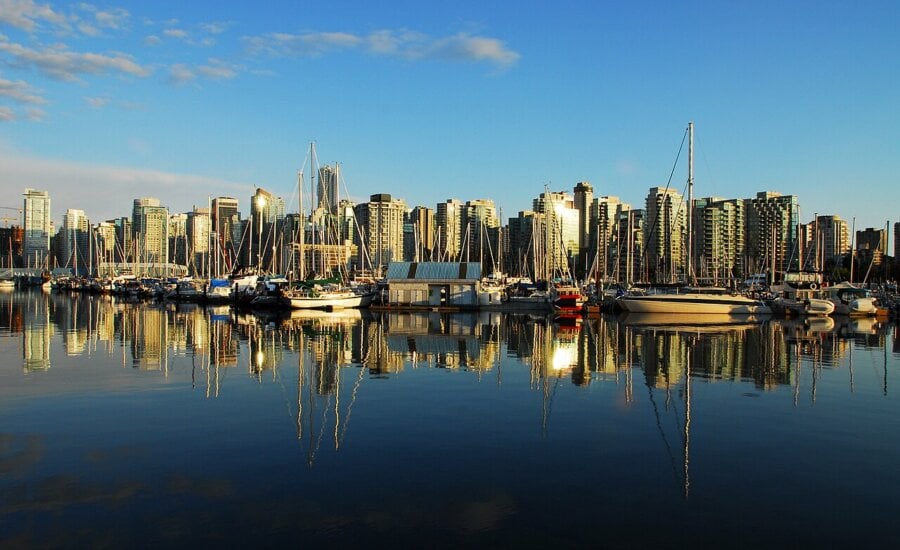
Here are the top neighbourhoods for real estate purchases in Vancouver this year. To view all the results, slide the columns right or left using your fingers or mouse, or download the data to your device in Excel, CSV, or PDF format.
Few neighbourhoods in Vancouver have repriced themselves as convincingly as Mount Pleasant West. A perfect Economics Score of 5 out of 5, a Value Score of 4.70, and 19.46% five-year appreciation to an average sold price of $1,172,050 reflect a district that has found its identity and monetised it. The False Creek Flats tech and digital media corridor did the heavy lifting, adding thousands of high-income jobs and turning a former industrial edge into the city’s most compelling innovation address.
The residents skew young and professional: only 10% of households have children. Housing runs from low-rise apartments and missing-middle units to incoming high-rises near the future Broadway Subway station, a mix that suits people building careers more than backyard space.
An Accessibility Score of 3.93 reflects a neighbourhood already operating near peak connectivity, even as cranes mark its next chapter at Main and Broadway. The sidewalks stay busy; the detours feel purposeful. When the Broadway Subway opens in 2027 and locks into the Canada Line, travel times shrink, and the corridor tightens. In Mount Pleasant West, progress is visible in real time, and buyers are moving accordingly.
Mount Pleasant East has achieved something rare: rising desirability without sacrificing soul. Main Street’s craft breweries and boutiques bring a vibrant energy, and with 20% of households being families, it’s clear this is a neighbourhood where people are choosing to put down roots. Local landmarks like Dude Chilling Park serve as the neighbourhood’s “outdoor living room,” offering green space and play areas that foster a genuine community atmosphere.
The market reflects this stability. With an average price of $876,958 and 12.5% five-year growth, the area holds a strong Value Score of 4.30. It remains a compelling East Side option, offering character without the feeling that you arrived a decade too late. Architecturally, the landscape features early-century character homes, multi-family conversions, and modern live-work lofts.
Despite extensive construction along the corridor, Mount Pleasant East remains a top-tier area with a high Accessibility Score of 3.93. The neighbourhood continues to win over buyers with its authentic character homes and contemporary lofts because the lifestyle is already in motion. The infrastructure is simply catching up to the demand.
Three bridges meet here, and so does most of what makes Vancouver work. Positioned at the convergence of Granville, Burrard, and Cambie, Fairview has quietly earned its place as one of the city’s most connected neighbourhoods. The data backs it up: a 3.96 Accessibility Score, a leading Economics Score of 4.26, and a steady 13.12% increase in value over the past 5 years. Together, they make the $883,075 average price feel less like a gamble and more like a safe entry point into one of Vancouver’s most established communities.
Vancouver General Hospital and City Hall give the neighbourhood its economic backbone, attracting the doctors, researchers, and city staff who appreciate a short walk to work and restaurant options on the short commute back. That professional pull shapes the demographic: 51% of residents live alone, and only 6% have children, the lowest share in the city. Life here is defined by walkability (Walk Score of 93), with South Granville for shopping and Granville Island for the weekend. As the Broadway Plan introduces more density, Fairview’s evolution feels less like a disruption and more like a natural next step for an established urban core.
Despite widespread talk of a slowdown, Vancouver’s numbers tell a different story. The Lower Mainland recorded approximately 41,500 MLS transactions in 2025, with an average days-on-market of about 41 and a sold-to-ask ratio just over 97%. By any standard measure, those are still strong seller conditions.
“The media has correctly predicted 12 of the last two recessions,” says Phil Hahn, a licensed broker in Washington who also helped launch eXp Realty in B.C. “If you read the news, sometimes it seems like there’s doom and gloom. But on the actual MLS resale market, it was pretty strong.” (Zoocasa, the author of this study, is wholly owned by eXp World Holdings.)
The condo segment is the market’s workhorse. About 15,800 units sold last year—nearly twice as many as the roughly 7,700 townhomes—with typical prices in the mid-to-high $600,000s and homes selling quickly and close to asking.
Townhomes sit in the middle, with prices in the mid-$800,000s to low-$900,000s, but far fewer are available. Detached houses are where the real sticker shock hits: only about 1,400 sold in Vancouver proper, with prices well above $2.2 million. That’s why Hahn says condos move so quickly. When houses cost roughly double, starting small and working your way up the property ladder becomes a necessity, not a choice, for many investors.
The bulk of condo buyers are first-timers, and their behaviour has shifted from the frenzy years. The pandemic-era mentality (stretch to the limit, bid over asking, close your eyes and hope) has given way to something more measured. “There is definitely some conservative behaviour out there,” Hahn says. “It’s not the gung-ho craziness that we saw in COVID.” Ultimately, prioritizing comfort over maxed-out credit is emerging as a healthier new norm for buyers.
Answer a few quick questions to get a personalized quote, whether you’re buying, renewing or refinancing.
Vancouver’s market has long operated on a fundamental constraint that no policy or cycle can undo: geography. Surrounded by mountains, ocean, and the U.S. border, the Lower Mainland simply cannot sprawl the way other Canadian metros can, and that permanent scarcity underpins long-term values in a way few other cities can claim.
Seller expectations, though, need to be calibrated. “A seller always thinks their place is worth a million when it’s worth $800,000. That’s just the way it is,” Hahn says. The market is still rewarding well-priced listings that reflect current conditions and will trade hands quickly, while those that don’t will continue to sit on the market.
Similarly, Hahn guides buyers away from the paralysis of sticker shock by translating intimidating seven-figure prices into manageable weekly costs. “We get so caught up in the big numbers,” he explains. “But when you ask, ‘Can I afford $450 a week?’ the conversation shifts. It makes the dream of ownership feel much more palatable and within reach.”
For renters, the math deserves a closer look. Hahn’s team frequently shows renters how their monthly payment could convert into a mortgage, building equity rather than paying down someone else’s. In a city with some of the highest rents in the country, the gap between renting and owning at the entry level may be narrower than many assume.
And for those who do their homework, get pre-approved, and resist the urge to overextend, the fundamentals haven’t changed: land is scarce, demand is deep, and the market continues to reward those who price and buy with clarity. Right now, Vancouver is at least giving buyers a moment to catch their breath.
This is an unpaid article. It was written by a content partner based on its expertise and edited by MoneySense.
This is an editorially driven article or content package, presented with financial support from an advertiser. The advertiser has no influence on the creation of the content.
Share this article Share on Facebook Share on Twitter Share on Linkedin Share on Reddit Share on Email


Homeowners can now earn Aeroplan points for making monthly mortgage payments through Chexy. Members earn 1 Aeroplan point per...
Property taxes can change after reassessments or renovations. Learn when an appeal makes sense and how to challenge your...
More Canadians are turning to laneway homes for affordable housing. Find out how much they cost and whether they're...

Before buying a home in Canada, U.S. citizens should understand the cross-border tax and ownership rules that can have...

Discover how the Smith Manoeuvre works, who it's right for, and the potential benefits and risks of using your...

Reverse mortgages let older Canadians unlock home equity without selling. Learn how they work, the costs, risks, and when...

Accessible home renovations can cost tens of thousands of dollars. Learn about grants, tax credits, and practical ways to...
Learn what condo fees pay for, why they rise over time, and how to assess a building's financial health...
If your landlord defaults and the home is sold, your tenancy may still be protected—but rules vary by province....
Thinking of selling your home without a Realtor? Here’s what DIY sellers need to know about commissions, legal risks,...