
Where to buy real estate in Canada in 2026: National overview

Presented by
Ratehub.ca
These are the regions and neighbourhoods offering the best long-term value for home buyers, based on affordability, price trends, and other factors.


Advertisement
Presented by
Ratehub.ca
These are the regions and neighbourhoods offering the best long-term value for home buyers, based on affordability, price trends, and other factors.
Years of pent-up demand were supposed to be unleashed on the Canadian real estate market in 2025. Economists and real estate experts alike predicted a full rebound in the spring market as interest rates stabilized and housing inventory reached healthier levels. Then, unexpected tariff threats from the U.S., trade risks, and general economic uncertainty eroded those expectations.
Buyer confidence waned, leading to a year-over-year decline in national home sales every month from February to May. Sales began to pick up in the summer, particularly as the Bank of Canada signalled it was reaching the end of its rate-cutting cycle. But by late fall, momentum slowed again, resulting in the year finishing with 1.9% fewer sales than in 2024.
However, not all areas of real estate suffered. National new listings saw a substantial boost in supply, with year-over-year increases recorded every month except for February and November. Improved affordability likely benefited buyers who were active this past summer, as the national benchmark price trended downward every month from May.
For the first time in a long time, both interest rates and housing costs are holding firm. As a result, several housing markets are offering buyers the ideal combination: accessible entry points and growth potential.
For our 2026 edition of Where to Buy Real Estate in Canada, MoneySense partnered with Zoocasa, an award-winning prop-tech company, to reveal the best places to buy property in Canada, including spotlighting the top neighbourhoods in the country’s most in-demand real estate markets.
Answer a few quick questions to get a personalized quote, whether you’re buying, renewing or refinancing.
In the table below, you’ll find our rankings for the top places to buy property in Canada, based on Zoocasa’s analysis of data from 44 different regions. Slide the columns right or left using your fingers or mouse. You can download the data to your device in Excel, CSV, and PDF formats.
Canada has not had a normal real estate cycle for several years. Turbulent shifts in inventory, borrowing costs, remote work trends, trade policies, and inflation have made it challenging for buyers to plan their next moves. But while buyer hesitation persisted in 2025, it did ease after the Bank of Canada lowered interest rates to a three-year low. This relief, combined with softer price growth, points to a more normal 2026 market.
“The market is finally finding its footing after years of unpredictability,” says Brittany Kostov, Zoocasa Industry Relations Officer. “The price points and inventory levels we’re seeing now represent a much-needed reset for the market. It’s a shift toward a more sustainable pace where buyers have the luxury of being selective rather than reactive.”
As of January 2026, fixed interest rates remain stable, sitting firmly under 4%. The Bank of Canada has also suggested that it will hold its overnight lending rate at 2.25% for a significant portion, if not all, of the year. Stable economic policy, after four years of fluctuating interest rates, could give some buyers the confidence to make a significant financial commitment.
At the same time, the country’s most expensive markets are seeing some relief from the soaring prices seen during the pandemic. According to the Canadian Real Estate Association (CREA), Vancouver’s benchmark price decreased by 2.3% from December 2021 to December 2025, while Toronto and Hamilton-Burlington experienced drops of 17.2% and 20.3%, respectively. Meanwhile, the Prairies and the East Coast were the big drivers for price increases. Specifically, Regina, Saskatoon, and St. John’s all experienced year-over-year price increases of more than 6% in December.
While national housing supply improved significantly in 2025, inventory remained tightest in Manitoba and Alberta, which ended the year with just 2.1 and 2.9 months of supply, respectively. British Columbia, by contrast, shifted into buyers’ territory, finishing 2025 with a much loftier 6.8 months of inventory. With just over 4 months of inventory each, Ontario, Quebec, and Nova Scotia are all entering 2026 in a relatively balanced market.
“For buyers in these balanced or buyer-favoured regions, they can take their time to find a home that truly fits their needs without the pressure of a ticking clock,” says Kostov. “As the market stabilizes, the premium has shifted from ‘any home’ to the ‘right home’. Even in more competitive regions where supply is low, the goal has moved away from simply securing a property at any cost and toward finding those that offer the best long-term stability for the investment.”
Answer a few quick questions to get a personalized quote, whether you’re buying, renewing or refinancing.
The capital of New Brunswick has claimed our top spot for the second year in a row. With a value score of 3.76 out of 5, Fredericton boasts highly accessible real estate options for buyers looking to build equity on the East Coast.
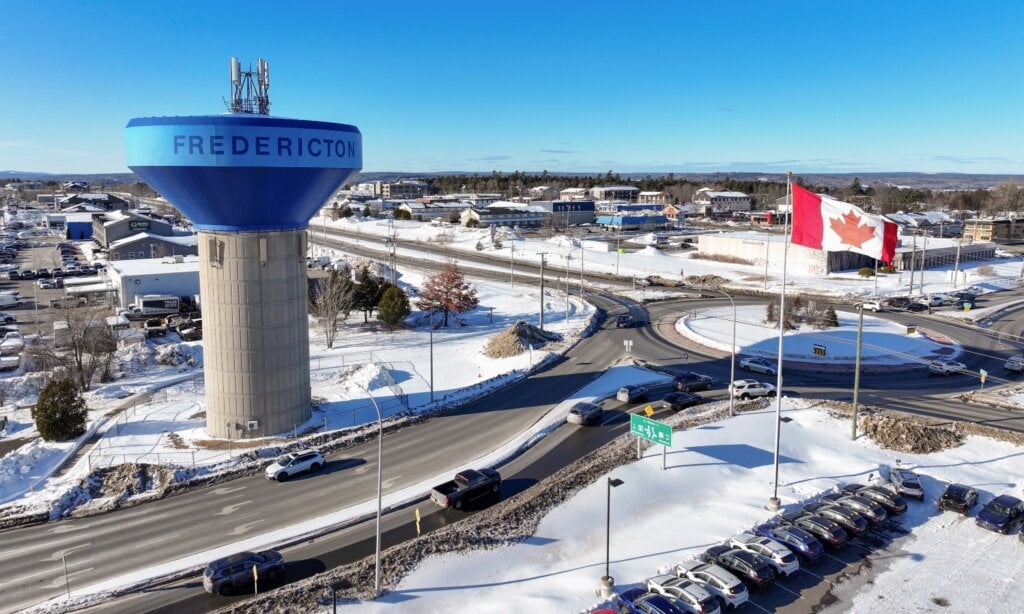
Fredericton finished 2025 with a benchmark price of $344,467—10% higher than in 2024 and 74% higher than in 2020. Despite this impressive appreciation, the Maritime capital retains its reputation as one of the most affordable real estate markets in Canada. Fredericton’s benchmark price sits well below the national benchmark of $683,567, representing a $339,100 discount. Only three other markets analyzed reported a lower benchmark price than Fredericton.
Beyond affordability, it’s the stability that draws people in, says Jessie Yerxa, an eXp real estate agent based in Fredericton. “It’s a resilient, reliable market that avoids the typical boom-and-bust cycle.” The city also appeals to remote workers thanks to its strong tech presence and internet infrastructure, while offering a lifestyle rich with over 120 kilometres of paved walking and biking trails, many of them winding along the scenic St. John River. “Fredericton is big enough to grow in and small enough to belong in,” Yerxa says. (Zoocasa, the author of this study, is wholly owned by eXp World Holdings.)
Unlike many other regions where conditions have stabilized, Fredericton is still a seller’s market. Despite national stabilization, Fredericton’s low inventory (5.5 months) and high sales-to-listings ratio continue to favour sellers, leaving buyers with little room for negotiation.
Yerxa explains that the competition is price-point dependent. “Our most common price point to see multiple offers would be the more affordable range of $350,000 and under,” she says. Above that threshold, buyers have more breathing room. A turnkey single-detached home in one of Fredericton’s most desirable neighbourhoods averages between $450,000 and $525,000, she adds.
A consequence of tight supply is upward price pressure. Since 2023, Fredericton’s benchmark price has been steadily rising, up 32.7% from January 2023 to December 2025. While Fredericton’s home prices may still be accessible to out-of-province buyers, the recent growth could increasingly put ownership out of reach for local residents, especially those earning the median after-tax income of $69,000.
Construction is ramping up to meet growing demand. 2025 was a record year for housing development in Fredericton, with the city issuing 1,564 building permits for new housing units. The increase in supply is well-needed, as the city has grown by 30,000 residents since 2000. Still, it may take time for this new inventory to translate into relief for buyers.
Yerxa says the tide is starting to turn, though. Interest rates have stabilized, new apartment buildings have eased pressure on the rental market, and a wave of single-family home construction is adding inventory. She notes that the market is finally offering some relief: “With more inventory available, buyers don’t feel quite so weighed down by the competition.”
For now, Fredericton’s combination of relative affordability, steady appreciation, and improving supply keeps it firmly at the top of our rankings, and suggests the city’s best chapters are still ahead.
With a metro population nearing 243,000, the capital of Newfoundland and Labrador is drawing more people than ever to ‘The Rock.’ Entering the top three for the first time, St. John’s has earned its spot in the spotlight through consistent growth and a booming real estate market.
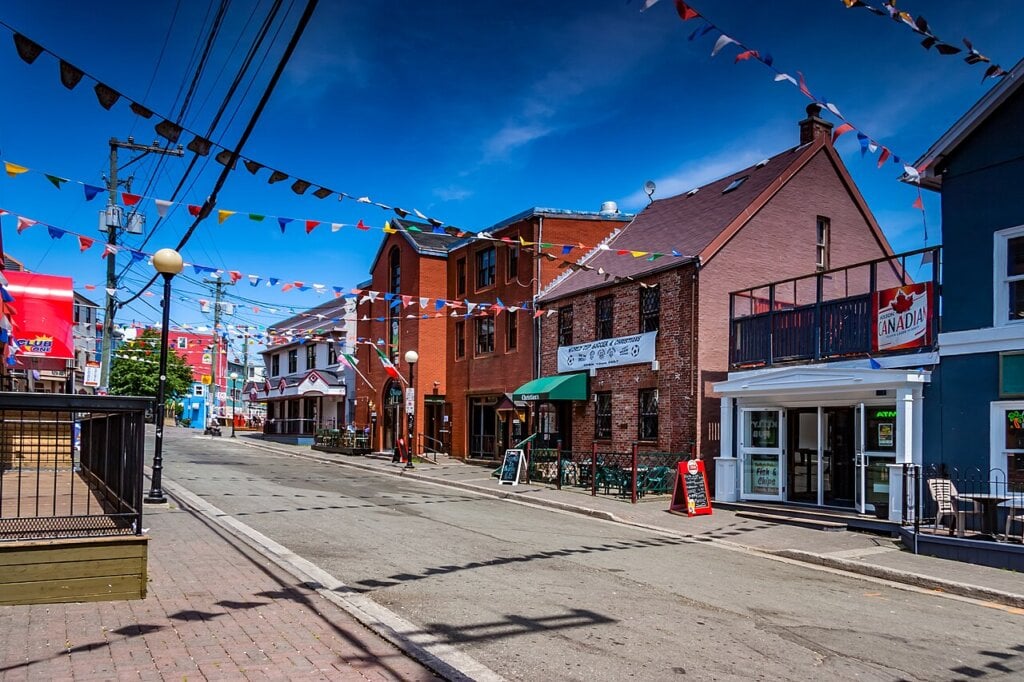
St. John’s 2025 benchmark price was $381,042, marking a 23% increase from 2022 and a 41% increase from 2020. While many real estate markets peaked in 2022 and have since seen price declines, St. John’s stands out for stable price growth. In fact, it has achieved the largest three-year price growth among all the markets analyzed on our list.
The city has been largely insulated from the national trend, says Jason Piercey, an eXp real estate agent in St. John’s. “We’re so exempt from the country. When interest rates went up to cool every other market, we still had prices increase because we have no supply,” he says. (Zoocasa, the author of this study, is wholly owned by eXp World Holdings.)
Since 2020, St. John’s population has surged from 219,282 to 243,478, according to Statistics Canada. This 11% increase notably outpaces growth in major hubs like Toronto (9.5%) and Montreal (5.5%), but this rapid expansion comes with a price: a significantly more competitive housing market.
A decade ago, first-time buyers were typically 25 to 28 years old. Now they’re 32 to 36, Piercey explains, mostly dual-income couples. “Young people want to buy, but the cost of everything else just gets there first.”
He explains that most buyers can afford to get in, but the problem is what they’re walking into. “Buyers aren’t failing in qualifying, they’re failing in confidence,” he says. “We have such low inventory that nearly everything sells with competing offers.”
The province recorded just 3.4 months of inventory at the end of 2025, a remarkable drop from 5.2 months at the end of 2024. This may be welcome news for sellers, who can likely command top dollar for their homes, but it makes the market tight for first-time buyers hoping to get a foot in the door.
If the past few years of price growth are any indication of where St. John’s is headed, the market may set record-breaking highs this year. From January 2025 to December 2025, St. John’s benchmark price increased by 9.2%. That comes out to a $33,200 increase, not an insignificant amount for locals earning the median after-tax income of $72,500.
Move-up buyers are sitting on more equity than ever, Piercey states, but many won’t list because they’re not confident they’ll find their next home.
Pre-sale new construction offers a way out. In St. John’s, new builds typically take just six to ten months from start to move-in. “Your price gets locked in once you sign with the builder,” he says. “So if the market rises during that time, you could walk in with equity from day one.”
A shortage of affordable, well-priced homes will keep the market in sellers’ territory in 2026. While St. John’s saw a 19% increase in housing starts in 2025, it still trails behind the expansion seen in other growing metros like Halifax and Fredericton, which saw increases of over 30% according to the Canada Mortgage and Housing Corporation (CMHC).
A city long overlooked on the national stage, St. John’s rapid rise up our rankings reflects a simple reality: affordable inventory is disappearing fast, and buyers who recognize that early stand to benefit the most.
While Edmonton isn’t the cheapest market in our ranking, its median after-tax income of $84,000 rivals that of Toronto and Vancouver, making it far more accessible than Canada’s largest hubs. With 1.2 million people calling Edmonton home, it also offers the best value for those looking to balance big city life with affordable housing.

Edmonton is attracting attention from across the country, says Aligul Arslan, an eXp real estate agent based in the city. “For people selling in the GTA or Vancouver and going to either Calgary or Edmonton, it doesn’t hurt paying a third of the cost,” he says. That affordability edge is also pulling investors away from Calgary, where prices have climbed faster. “On the investor side, more people are choosing Edmonton because you’re actually cash flowing here,” Arslan adds. (Zoocasa, the author of this study, is wholly owned by eXp World Holdings.)
Unlike Fredericton and St. John’s, which experienced steady price growth from the start to the end of the year, Edmonton’s price trajectory was the opposite. From January 2025 to December 2025, its benchmark price decreased by 0.6% to $408,300. But that doesn’t mean homeowners aren’t building equity. Edmonton experienced a more predictable real estate cycle in 2025, with prices peaking in the spring and summer before cooling in the fall and winter. Total growth remains strong, though, with the benchmark price up 9% since 2022 and 23% since 2020.
Arslan says the sweet spot for demand is in the single-family segment. “There’s strong demand between $400,000 and $600,000,” he says. First-time buyers, typically in their late 20s to mid-30s, are increasingly skipping condos and townhomes in favour of lower-priced detached homes. “There’s better appreciation and better value,” he says. And for buyers willing to gut a kitchen or refinish some hardwood, a detached home in Edmonton is still well within reach.
Edmonton was the fastest-growing metropolitan area last year, with its population increasing by 3% from July 2024 to July 2025. Despite this growth, Edmonton is on track to meet future demand. While the rest of the country struggles to build at a fast enough pace, CMHC highlights Edmonton as the only major metropolitan area that has sufficient housing to maintain affordability over the next decade. In 2026, buyers can expect this healthy inventory to sustain a balanced market, offering a level of stability rarely seen in other major cities.
That stability is a key part of the city’s appeal for investors, Arslan says. “It’s not a market where we see a lot of fluctuations,” he says. “It’s a buy-and-hold strategy. They’re definitely in it for the long run.”
To determine the regions and neighbourhoods that offer home buyers the greatest value in 2026, Zoocasa studied real estate data from the top real estate markets across Canada. Rankings are based on data collected in early 2026, and interviews were conducted around the same time.
The home price data for the national ranking was pulled from the CREA. We determined which areas to include based on what information was available from CREA. It does not provide data for all Canadian cities and markets, meaning some areas may not be covered in our report. The reported data for certain cities, such as Hamilton and Burlington, is combined by CREA and reflects the benchmark price of the two cities combined.
We ranked regions and neighbourhoods within the same geographic area against each other. The overall rankings and scores are based on the areas’ benchmark home prices and recent real estate price growth.
Our value score accounts for an area’s composite benchmark home price as of Dec. 31, 2025, relative to the overall regional average, with more affordable home prices contributing positively to the score. The calculation also accounts for one-year, three-year and five-year home value growth in the area, with more weight assigned to the most recent data. Although recent comparables are better indicators of value, a positive and steady trend of home value growth was considered as part of the overall calculation. In addition to real estate data, the total value score factors in a city’s median after-tax income, safety index, and health care index.
In addition to home price data and value scores, our neighbourhood rankings also factor in neighbourhood economics data, which we weighted equally with value in the overall evaluation. These neighbourhood economic scores are based on factors commonly considered in economic and affordability indexes: the percentages of households that own or rent, education levels, median income and household income.
To gain further insight into each neighbourhood, we have included additional information on amenities and accessibility, as well as the percentage of households with children. While we did not use these factors to determine the overall ranking, they helped us assess the lifestyle in each area.
The neighbourhood accessibility scores comprise a walk score, transit score and bike score. Each factor is given a score out of 100; the three scores are weighted at 60%, 30% and 10%, respectively, for a neighbourhood accessibility score out of 5.
We used data from the following organizations: Statistics Canada, Canadian Real Estate Association (CREA), Toronto Regional Real Estate Board (TRREB), Realtors Association of Edmonton (RAE), Calgary Real Estate Board (CREB), Greater Vancouver Realtors (GVR), WalkScore, and Numbeo.
This is an unpaid article. It was written by a content partner based on its expertise and edited by MoneySense.
This is an editorially driven article or content package, presented with financial support from an advertiser. The advertiser has no influence on the creation of the content.
Share this article Share on Facebook Share on Twitter Share on Linkedin Share on Reddit Share on Email


Home sales in Canada are down but sale prices and listings are up find out what the latest numbers...

The Bank of Canada held its key interest rate at 2.25%. But growing uncertainty in the Middle East and...

A secondary suite can help homeowners offset housing costs. Here’s what to know about converting a home into a...

The Bank of Canada has held its interest rate at 2.25% since October last year. Will that change?

Homeowners can now earn Aeroplan points for making monthly mortgage payments through Chexy. Members earn 1 Aeroplan point per...

Property taxes can change after reassessments or renovations. Learn when an appeal makes sense and how to challenge your...

More Canadians are turning to laneway homes for affordable housing. Find out how much they cost and whether they're...

Before buying a home in Canada, U.S. citizens should understand the cross-border tax and ownership rules that can have...

Discover how the Smith Manoeuvre works, who it's right for, and the potential benefits and risks of using your...

Reverse mortgages let older Canadians unlock home equity without selling. Learn how they work, the costs, risks, and when...
The chart does not sort properly. It sorts by the text value and not the numeric value.
To arrange by column, tap the arrow in the column header cell that you want to arrange it by.
Zoocasa’s description of Ottawa hasn’t been updated in at least three years. Jim Watson ended his run as mayor in 2022.
Thank you for letting us know. We have let the Zoocasa team know. The page will updated.
This is getting so interesting with regards of future real estate values regardless of where in Canada one lives and owns a home.
It is also interesting that while BC residents are not being renewed on their mortgage by the banks in some instants due to the current land claims by the native community of Canada. Canadians are asked in Canada and the school boards in some Ontario communities are asking for Canadians in all parts of Canada to recognize that they are living on the lands of original native people. If the banks are not renewing mortgages because of the legal BC ruling, it seems that any Canadian that is being asked to recognize this ,is at risk of having what is taking place in BC also being subjected onto themselves as those that pledged allegiance to the cause cemented the baby steps that might cause this to come to fruition and this in my opinion seems a plausible contributing contribution in the demise of materialistic side of home ownership
.It seems at least to myself that the danger to perceived financial value by acknowledging that one stands on the grounds of the original native community a precursor . Then when I take into account other factors effecting the Canadian housing market it seems a race to the bottom is taking place for some .